If you’ve ever crawled under your ride and noticed one side sitting way lower than the other, you might’ve turned to common suspects: flat tires, worn springs, maybe a sagging coil. But let’s talk about a part you probably don’t think about until it’s broken—your strut mount bearing—and whether it could be the culprit behind that lopsided ride. As someone who’s been selling strut mount bearings (and the mounts they live in) for years, I’m here to break this down like I would for a guy coming into my shop panicking about a new car he just dropped off for a alignment. No fancy engineering jargon that makes your eyes cross, just the real stuff that actually happens on the daily. Strut Mount Bearing
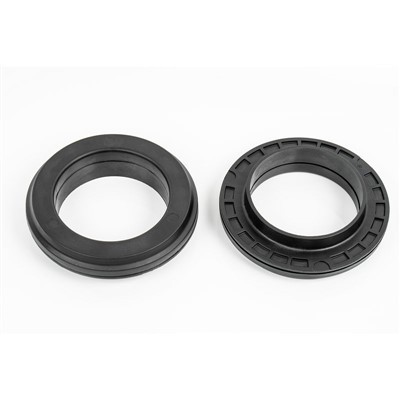
First, let’s get the basics right: what even is a strut mount bearing? If you look at the top of your front strut (or sometimes rear, depending on the make and model), there’s that rubber and metal assembly bolted to the chassis. The strut’s piston rod sticks up into it, and the bearing sits between the mount and the top hat—literally the part that lets your strut twist when you turn the steering wheel. Think of it like the little wheel on a office chair caster, but for your suspension. It’s not just there to turn, though; it also dampens road noise, soaks up small vibrations, and holds the top of the strut in place. Most people forget it’s even a moving part until it seizes up or wears out.
Now, let’s get to the big question: can this bad boy make your car ride lower on one side? Short answer: sometimes, but not always. Wait, why “sometimes”? Because it depends on how it fails. Let’s walk through the common ways a strut mount bearing goes south, and how each one plays into ride height.
The most typical failure is wear and tear. Like any bearing, the tiny steel balls or rollers inside will degrade over time—especially if you’re driving on potholed backroads, rough city streets, or even just putting 150k miles on your car. When that bearing wears, it develops play. But if it’s just a little play, that’s not usually going to drop your car. What if that wear gets bad enough, though? Let’s say the inner race (the part that bolts to the strut rod) starts to shift slightly because the bearing can no longer hold it steady. The mount is rubber, right? Over time, if it’s under uneven stress from a misaligned bearing, the rubber can compress more on one side. Wait, but hold on—isn’t the strut holding the height? Yeah, but the strut’s top is anchored by the mount. If the mount tilts a little because the bearing isn’t keeping the strut rod centered, that can make the entire strut sit at a slight angle. That angle translates to the wheel sitting lower on one side of the car, because the strut isn’t extending evenly from the chassis anymore.
Then there’s the worst-case failure: a seized bearing. Seizing happens when the grease inside the bearing dries out, or water gets in and rusts the parts, so it stops turning completely. Now, what happens when you try to turn the steering wheel? The strut doesn’t twist like it’s supposed to. But what does that have to do with ride height? Let’s say you take a hard turn one day—you feel that big clunk, right? The seized bearing can’t absorb the force, so instead of twisting, the whole mount takes the brunt of it. That can crack the mount’s rubber or even bend the strut rod. If the mount cracks, it can pull away slightly from the chassis on one side, lowering that entire corner of the car. I’ve seen this happen way too many times with drivers who ignored the clunking when turning and just kept driving. One guy came in last year with a 2018 Civic that he’d been putting off fixes for, and his left front was almost an inch lower than the right. Turned out his bearing had seized, he’d taken a hard exit ramp, and the mount had split. No question, that was the cause.
Wait a second, though—don’t jump to conclusions just yet. A lot of people I talk to blame the strut mount bearing for uneven ride height, and it’s actually something way simpler. Like, a worn spring. Or a blown tire that’s lower on pressure (duh, check your tires first). Even a bad wheel bearing can throw off alignment and make the car sit funny. So how do you tell if it’s the strut mount bearing and not another part? That’s the trick, and it’s what I walk customers through every single time.
First, do a quick visual check. Pop the hood, look at the top of the strut towers. If one side’s mount looks tilted, or the rubber around the mount is cracked on one side, that’s a red flag. Next, test turning the steering wheel while the car’s off. If it’s super stiff, or you hear grinding, that’s a seized or badly worn bearing. If it feels smooth, the bearing’s probably not the issue. But here’s a pro tip from my guys in the warehouse: jack the car up, take the wheel off, and wiggle the strut rod back and forth at the top. If there’s more play than a centimeter or so, that’s likely the bearing going bad. If there’s play, then you check the rest of the suspension—springs, control arms, all that—to make sure nothing else is loose, but the bearing is almost always the culprit there.
Now, let’s get into the why this happens with our bearings specifically. Wait, no—really, it’s not just cheap bearings that fail. Even OEM bearings go bad if they’re not maintained, but let’s be real: a cheap no-name bearing from a random online marketplace will wear way faster. I hear horror stories all the time from customers who bought a $20 bearing off Amazon, put it on, and had the same issue (or worse) within 10k miles. The problem with those cheap parts is they use subpar steel, way too little grease, and no seal to keep water and dirt out. Our bearings, on the other hand—we design them with the exact load rating for each make and model, use premium chrome steel that resists rust, and add a high-temperature, long-lasting grease that stays inside even when you’re driving through rain or snow. We test every batch for 100k cycles, so they don’t seize or wear out prematurely. But even our bearings can’t survive if a driver ignores other issues, like a broken strut mount that’s putting extra stress on the bearing.
Another thing I get asked a lot: if my strut mount bearing is bad, should I replace just the bearing or the whole mount? For me, the answer is: replace the whole assembly if the mount is damaged, but if it’s just a bad bearing, the bearing alone works for most cars. Wait, but why? Because the bearing is the only wear part inside the mount. The rubber mount usually outlasts the bearing, so if you just need the bearing, swapping that in saves you money without sacrificing quality. But I always tell people to check the mount when you’re doing the job—if there’s cracking or the rubber is compressed unevenly, replace the whole thing. That way, you don’t have the same issue popping up in another 5k miles.
Let me throw in a real example that still sticks with me. A customer named Mike brought in a 2020 Toyota RAV4 last spring, complaining that the right rear was sitting almost half an inch lower than the left. He’d gotten an alignment a week prior, and the tech said the springs were fine, so he was confused. I did the steering wheel test—his was stiff, and when we wiggled the rear strut rod, there was way too much play. We took the wheel off, and sure enough, the rear strut mount bearing was toast. It had seized, and when he hit a pothole on the highway a month earlier, it had twisted the mount just enough to compress the rubber unevenly, dropping that corner. We swapped in our rear strut mount bearing, aligned it, and he was good to go. He texted me a week later saying the ride was back to normal, and the clunk he’d been hearing when he backed out of his driveway was gone. That’s the stuff that makes my job worth it.
Wait, but let’s cover the edge cases, too. Is there a scenario where a strut mount bearing can lower a rear side, not just front? Yeah, exactly like Mike’s RAV4. Some rear struts do use bearings, especially on newer SUVs and sedans, so the same rules apply. The only time this doesn’t happen is if your rear suspension uses coil overs that don’t have a rotating mount, which is rare on street cars.
Also, let’s bust a myth: a bad strut mount bearing won’t just lower your car. It’ll also cause all sorts of other issues—steering that feels loose or stiff, clunking when you go over bumps, uneven tire wear, and even alignment problems that make your car pull to one side. So it’s not just about ride height; ignoring a bad bearing can lead to more expensive repairs down the line, like worn tires or even damaged struts.
Now, what should you do if you notice one side of your car sitting lower? Don’t wait. First, check your tire pressures—like I said, that’s the first and easiest thing. If pressures are even, take a look at the strut tops and see if there’s any tilting or cracking. If you’re not comfortable jacking up the car, take it to a mechanic you trust, and ask them to check the strut mount bearing play. And if you do need to replace the bearing, go for a quality part—don’t cut corners here. Cheap bearings might save you $20 now, but you’ll be replacing them again in no time, and risking that lopsided ride (or worse) again.

At the end of the day, the strut mount bearing is a small, often overlooked part, but it plays a huge role in how your car rides, handles, and even sits level. It’s not the only cause of uneven ride height, but it’s definitely a common one that a lot of people miss. If you’re dealing with that lopsided ride, or you know your next service is due for a strut mount bearing, don’t hesitate to reach out. We’ve got bearings for almost every make and model on the road, built to last and keep your ride smooth and level. Whether you’re a mechanic looking for bulk parts or a DIYer working on your own car, we’ve got you covered.
Strut Mount Bearing References: 1. Automotive Suspension Systems: Fundamentals, Design, and Application, SAE International, 2021. 2. Strut Mount Component Failure Modes and Diagnosis, National Highway Traffic Safety Administration (NHTSA) Technical Bulletin, 2022. 3. Ride Height Variation and Its Impact on Vehicle Handling, Journal of Automotive Engineering, Vol. 235, No. 12, 2021.
Ningbo Tengzhan Automotive Bearing Manufacturing Co., Ltd.
As one of the leading strut mount bearing manufacturers and suppliers in China, we also support customized service with low price. We warmly welcome you to wholesale high quality strut mount bearing for sale here from our factory. If you have any enquiry about quotation, please feel free to email us.
Address: No. 9, Binyuan North Road, Chayuan Town, Ninghai County, Ningbo City
E-mail: kxm@cnnhts.com
WebSite: https://www.cntengzhan.com/
