Hey there, folks! I’m part of a turn – mill machine supplier team, and today I wanna chat about one of the burning questions in the industry: What is the maximum acceleration of the axes in a turn – mill machine? Turn‑Mill Machine Machine
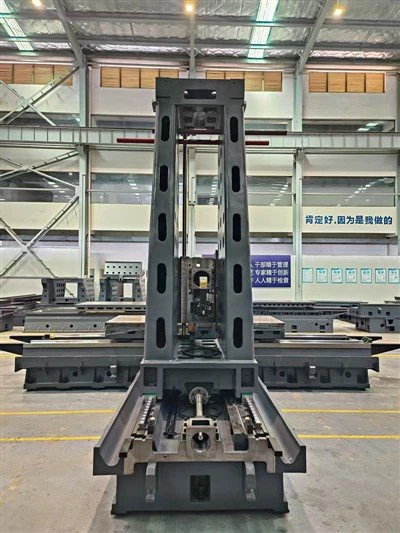
Let’s start from the basics. A turn – mill machine is a real workhorse in the manufacturing world. It combines the functions of turning and milling in one smooth – running operation. This means it can handle a wide range of tasks, from simple round parts to complex, multi – faceted components. And the axes in these machines are the key to making all that movement happen.
The axes in a turn – mill machine are like the legs of a dancer. They’re what allow the cutting tools to move precisely where they need to go. There are usually multiple axes, like the X, Y, and Z axes for linear movement, and sometimes additional rotary axes. Each of these axes has its own maximum acceleration, which is a super important factor.
Acceleration, in simple terms, is how quickly an axis can go from a standstill to a certain speed. It’s measured in units like meters per second squared (m/s²). A high maximum acceleration means the axis can get up to speed really fast. This is crucial because it directly impacts how quickly the machine can change the position of the cutting tool.
So, why does high acceleration matter? Well, think about it. If you’re trying to produce a bunch of parts as fast as possible, a machine with axes that can accelerate quickly can move the tool to the next cutting position in a flash. This cuts down on the overall cycle time, which means you can churn out more parts in less time. And in the manufacturing game, time is money.
But here’s the thing: finding the maximum acceleration isn’t as simple as just looking at a number on a spec sheet. There are a whole bunch of factors that come into play.
One of the biggest factors is the mechanical design of the machine. The way the axes are built, the type of bearings they use, and the overall rigidity of the structure all have an impact. If the machine isn’t built well, trying to push the axes to a high acceleration can lead to problems like vibrations. And vibrations are the enemy of precision. They can make the cuts less accurate, and in the worst – case scenario, they can even damage the machine itself.
Another factor is the motor and drive system. The motors are what actually make the axes move, and the drive system controls how the motors operate. A powerful motor with a good drive system can handle higher accelerations. But you also have to make sure that the motor and drive are properly sized for the machine. If they’re too small, they won’t be able to provide enough power to reach the maximum acceleration. And if they’re too big, you’re just wasting energy and adding unnecessary cost.
The control system is also a key player. It’s the brain of the machine, telling the axes when to move and how fast. A sophisticated control system can optimize the acceleration based on the specific task at hand. For example, if you’re making a rough cut where precision isn’t as critical, the control system might allow the axes to accelerate at a higher rate. But when you’re doing a fine finish cut, it’ll dial back the acceleration to ensure a smooth, accurate cut.
Now, let’s talk about some real – world numbers. In general, the maximum acceleration of the linear axes (X, Y, and Z) in a turn – mill machine can range from around 2 m/s² to 10 m/s² or even higher in some high – end machines. Rotary axes usually have a different set of acceleration values, and they can vary widely depending on the size and design of the axis.
For smaller, more compact turn – mill machines, the maximum acceleration might be on the lower end of that range. These machines are often used for lighter – duty work or in applications where space is limited. On the other hand, large, heavy – duty turn – mill machines that are designed for high – volume production can have much higher maximum accelerations. They’re built to handle the stress of rapid movements and can take advantage of the increased productivity that comes with it.
But it’s not all about going as fast as possible. You also have to consider the quality of the parts you’re producing. If you push the axes to their maximum acceleration all the time, you might end up with parts that don’t meet the required specifications. That’s why it’s important to find the right balance between speed and quality.
As a turn – mill machine supplier, we spend a lot of time working with our customers to figure out the best acceleration settings for their specific needs. We take into account things like the type of material they’re cutting, the complexity of the parts, and their production volume. By doing this, we can help them get the most out of their machines while still producing high – quality parts.
If you’re in the market for a turn – mill machine, or if you’re looking to upgrade your existing one, understanding the maximum acceleration of the axes is crucial. It can have a big impact on your productivity, your bottom line, and the quality of your products.
So, if you’ve got any questions about turn – mill machines, or if you’re interested in learning more about how the maximum acceleration of the axes can benefit your business, don’t hesitate to reach out. We’re here to help you make the right choice for your manufacturing needs. Whether you’re a small shop just starting out or a large – scale production facility, we’ve got the expertise and the machines to meet your requirements.
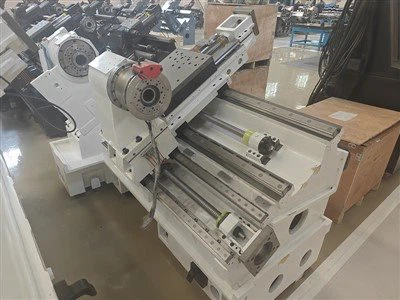
Let’s have a chat and see how we can work together to take your manufacturing to the next level.
Box Way Vertical Machining Center References
- "Manufacturing Engineering and Technology" by Serope Kalpakjian and Steven R. Schmid
- "CNC Programming Handbook" by John Zimmers
Smartech Machinery & Equipment Co., Ltd.
As one of the most professional turn‑mill machine machine manufacturers and suppliers in China, we also support customized service. Please rest assured to buy bulk turn‑mill machine machine made in China here from our factory. Contact us for more details.
Address: Room 2832, Changping Commercial Mansion, Shihua Road, Futian Free Trade Zone, Shenzhen, China
E-mail: smartech@smartechcnc.cn
WebSite: https://www.smartech-cnc.com/
