Hey there! I’m a supplier of high frequency vibrating screens, and today I wanna chat about how the efficiency of these bad boys is calculated. It’s a topic that might seem a bit technical at first, but I’ll break it down in a way that’s easy to understand. High Frequency Vibrating Screen
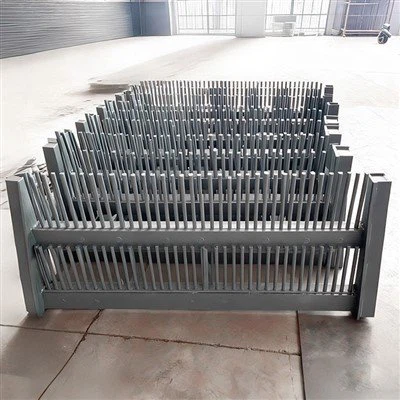
First off, let’s talk about what high frequency vibrating screens are and why efficiency matters. High frequency vibrating screens are used in a bunch of industries, like mining, construction, and recycling. They’re designed to separate different-sized particles from a mixture. Efficiency is super important because it directly affects how well the screen does its job and how much money you can make. A more efficient screen means you can process more material in less time, which is a win for everyone.
So, how do we calculate the efficiency of a high frequency vibrating screen? There are a few different factors we need to consider.
1. Throughput
The first thing we look at is throughput. This is basically the amount of material that the screen can process in a given amount of time. It’s usually measured in tons per hour or cubic meters per hour. To calculate throughput, we need to know the size of the screen, the speed of the vibration, and the type of material being screened.
For example, let’s say we have a screen that’s 2 meters wide and 3 meters long. The vibration speed is set at 1500 revolutions per minute, and we’re screening a mixture of sand and gravel. Based on our experience and some testing, we know that this screen can handle about 50 tons of material per hour. That’s our throughput.
2. Separation Efficiency
The next factor is separation efficiency. This is a measure of how well the screen separates the different-sized particles. If we’re trying to separate sand from gravel, for example, we want the screen to let the sand pass through while keeping the gravel on top.
To calculate separation efficiency, we need to measure the amount of the desired particle size that passes through the screen and compare it to the total amount of that particle size in the original mixture. Let’s say we start with 100 tons of a mixture that contains 30 tons of sand. After screening, we find that 25 tons of sand have passed through the screen. The separation efficiency would be calculated like this:
Separation Efficiency = (Amount of sand passed through the screen / Total amount of sand in the original mixture) x 100%
Separation Efficiency = (25 tons / 30 tons) x 100% = 83.33%
This means that the screen is 83.33% efficient at separating the sand from the mixture.
3. Screen Open Area
Another important factor is the screen open area. This is the percentage of the screen surface that’s actually open and allows material to pass through. A higher open area means more material can pass through the screen, which can increase throughput.
To calculate the screen open area, we need to measure the size and shape of the openings in the screen. For example, if the screen has square openings that are 5 millimeters on each side, and the total area of the screen is 1 square meter, we can calculate the open area like this:
Let’s say there are 1000 such square openings in the 1 – square – meter screen. The area of each opening is 5 mm x 5 mm = 25 square millimeters = 0.000025 square meters. The total open area is 1000 x 0.000025 square meters = 0.025 square meters.
Screen Open Area = (Total open area / Total screen area) x 100%
Screen Open Area = (0.025 square meters / 1 square meter) x 100% = 2.5%
A higher open area generally leads to better efficiency, but it also depends on the type of material being screened. Some materials might clog the openings if the open area is too large.
4. Vibration Frequency and Amplitude
The vibration frequency and amplitude also play a big role in the efficiency of a high frequency vibrating screen. The frequency is the number of vibrations per second, and the amplitude is the distance the screen moves during each vibration.
A higher frequency can help to separate smaller particles more effectively, but it can also cause more wear and tear on the screen. A larger amplitude can help to move the material more quickly across the screen, but it might also cause the material to bounce off the screen instead of passing through.
To find the optimal frequency and amplitude, we usually do some testing with different settings. We look at the throughput, separation efficiency, and other factors to see which settings work best for a particular type of material.
Putting It All Together
To get the overall efficiency of a high frequency vibrating screen, we need to take all these factors into account. There’s no one – size – fits – all formula, but we can usually get a good estimate by considering the throughput, separation efficiency, screen open area, and vibration settings.
In general, a more efficient high frequency vibrating screen will have a high throughput, a high separation efficiency, a good screen open area, and well – optimized vibration settings.
Importance of Accurate Calculation
Calculating the efficiency accurately is really important for a few reasons. First of all, it helps us to design and select the right screen for a specific application. If we know the required throughput and separation efficiency, we can choose a screen with the appropriate size, open area, and vibration settings.
Secondly, it allows us to monitor the performance of the screen over time. If the efficiency starts to drop, we can figure out what’s going wrong and take steps to fix it. Maybe the screen is getting clogged, or the vibration settings need to be adjusted.
Finally, accurate efficiency calculations can also help us to compare different screens. If you’re in the market for a high frequency vibrating screen, you can use these calculations to see which one will give you the best performance for your money.
How We Can Help

As a supplier of high frequency vibrating screens, we have a lot of experience in calculating and optimizing screen efficiency. We can work with you to understand your specific needs, whether you’re in the mining industry, construction, or something else. We’ll use our expertise to recommend the right screen for your application, and we can also help you to fine – tune the settings to get the best possible efficiency.
Spare Parts If you’re interested in learning more about our high frequency vibrating screens or how we can help you improve your screening process, don’t hesitate to get in touch. We’re always happy to talk to potential customers and see how we can make your operation more efficient and profitable. Whether you have a small – scale project or a large – scale industrial operation, we’ve got the solutions you need. So, reach out to us today and let’s start talking about how we can work together to achieve your goals.
References
- Smith, J. (2018). Screening Technology Basics. Mining Journal.
- Johnson, K. (2019). Optimal Vibration Settings for High Frequency Screens. Construction Engineering Review.
- Brown, A. (2020). Throughput and Separation Efficiency in Screening Processes. Recycling Insights.
Xinxiang Fengda Machinery Co., Ltd.
Address: No.16 Wangguanying Village, Kangcun Town, Huojia County, Xinxiang City, Henan Province, China
E-mail: xxfdjx@163.com
WebSite: https://www.flipflowscreen.com/
