The impact resistance of steel cord conveyor belts is a crucial factor that significantly influences their performance and longevity in various industrial applications. As a trusted supplier of steel cord conveyor belts, I have witnessed firsthand the diverse challenges these belts face in different working environments. In this blog, I will delve into the concept of impact resistance, its importance, the factors affecting it, and how our products are designed to offer exceptional impact resistance. Steel Cord Conveyor Belt
Understanding Impact Resistance
Impact resistance refers to the ability of a steel cord conveyor belt to withstand sudden and intense forces applied to its surface without suffering severe damage. In industrial settings, conveyor belts are often subjected to impacts from falling objects, such as heavy rocks, ores, or large pieces of machinery parts. These impacts can cause deep cuts, tears, or even break the steel cords inside the belt, leading to operational disruptions, increased maintenance costs, and potential safety hazards.
A belt with high impact resistance can absorb and distribute the energy from these impacts more effectively, reducing the risk of damage. This not only ensures the smooth operation of the conveyor system but also extends the service life of the belt, providing long – term cost savings for our customers.
Importance of Impact Resistance in Industrial Applications
In industries such as mining, quarrying, and bulk material handling, the importance of impact – resistant steel cord conveyor belts cannot be overstated. In a mining operation, for example, conveyor belts are used to transport large quantities of raw materials from the extraction site to processing facilities. The mined materials, including rocks and ores, are typically dropped from significant heights onto the conveyor belts, generating substantial impact forces.
If the conveyor belt does not have adequate impact resistance, it may quickly become damaged, resulting in frequent belt replacements. This not only disrupts the production process but also incurs high costs associated with purchasing new belts and the labor required for installation. Moreover, damaged belts can pose safety risks to workers, as they may cause jams or sudden stops in the conveyor system, leading to potential accidents.
In the cement industry, conveyor belts are used to transport clinker, limestone, and other heavy materials. The high – temperature environment in cement plants, combined with the constant impact of heavy materials, places additional stress on the belts. A belt with good impact resistance can better withstand these harsh conditions, ensuring reliable and continuous operation.
Factors Affecting the Impact Resistance of Steel Cord Conveyor Belts
Steel Cord Properties
The quality and characteristics of the steel cords used in the conveyor belt play a vital role in determining its impact resistance. High – strength steel cords with appropriate tensile strength and ductility can better absorb and distribute impact energy. The diameter and construction of the steel cords also matter. Thicker cords generally provide greater strength and better resistance to impact, while the way the cords are arranged within the belt can affect how the energy is transferred.
Rubber Compound
The rubber compound that covers the steel cords is another critical factor. A high – quality rubber compound should have good elasticity and toughness. Elastic rubber can deform under impact and then return to its original shape, absorbing a significant amount of energy. Tough rubber, on the other hand, is resistant to cuts and abrasion, preventing the impact from causing surface damage that could lead to further deterioration of the belt.
Belt Construction
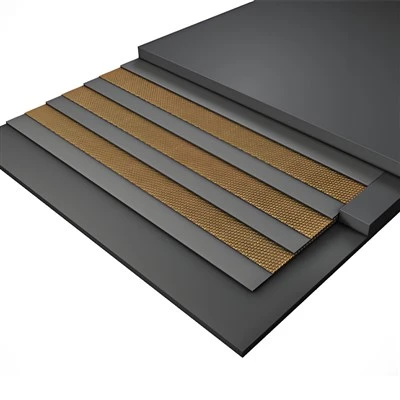
The overall construction of the conveyor belt, including the number of steel cord layers and the thickness of the rubber covers, affects its impact resistance. Multiple layers of steel cords can provide additional strength and support, distributing the impact force more evenly across the belt. Thicker rubber covers can act as a buffer, reducing the direct impact on the steel cords.
Working Conditions
The working conditions, such as the type of material being transported, the height of the drop, and the frequency of impacts, also influence the impact resistance requirements of the belt. For example, transporting sharp – edged materials will require a belt with better cut – resistance in addition to high impact resistance. A higher drop height will generate greater impact forces, necessitating a belt with enhanced impact – absorbing capabilities.
Our Approach to Enhancing Impact Resistance
As a supplier of steel cord conveyor belts, we take several measures to ensure that our products offer excellent impact resistance.
Advanced Steel Cord Technology
We use only high – quality steel cords with precise engineering. Our steel cords are manufactured to have optimal tensile strength and flexibility. By carefully selecting the diameter and construction of the steel cords, we can maximize their ability to withstand impact forces. We also conduct rigorous quality control checks on the steel cords to ensure they meet our strict standards.
High – Performance Rubber Compounds
Our research and development team has formulated special rubber compounds that are specifically designed for high – impact applications. These rubber compounds are created using a combination of natural and synthetic rubbers, along with various additives. The result is a rubber cover that is both elastic and tough, capable of absorbing impact energy and resisting cuts and abrasions.
Innovative Belt Construction
We have developed innovative belt construction techniques to improve impact resistance. Our belts are designed with multiple layers of steel cords strategically placed to evenly distribute the impact force. The thickness of the rubber covers is carefully determined based on the specific application requirements, providing an effective buffer against impacts.
Customized Solutions
We understand that different industries and applications have unique impact – resistance requirements. That’s why we offer customized solutions to our customers. Our team of experts works closely with customers to understand their specific needs, such as the type of material being transported, the working environment, and the expected impact forces. Based on this information, we can design and manufacture steel cord conveyor belts that are tailored to meet their exact requirements.
Real – World Examples of Our Impact – Resistant Belts in Action
In a large – scale mining project, our steel cord conveyor belts were installed to transport coal from the mine to the processing plant. The coal was dropped from a height of several meters onto the conveyor belts, generating significant impact forces. Thanks to the high impact resistance of our belts, they were able to withstand the continuous impacts without any major damage. This not only ensured the smooth operation of the conveyor system but also reduced the need for frequent belt replacements, resulting in substantial cost savings for the mining company.
In a cement factory, our belts were used to transport clinker. The high – temperature environment and the heavy, abrasive nature of the clinker posed significant challenges. However, our impact – resistant belts, with their specially formulated rubber covers and robust steel cord construction, were able to perform reliably. The belts showed minimal wear and tear even after months of continuous operation, demonstrating their excellent durability and impact resistance.
Conclusion
The impact resistance of steel cord conveyor belts is a critical aspect that directly affects the performance, reliability, and cost – effectiveness of industrial conveyor systems. As a leading supplier of steel cord conveyor belts, we are committed to providing our customers with products that offer exceptional impact resistance. Our advanced technology, high – quality materials, and customized solutions ensure that our belts can meet the most demanding application requirements.

If you are in need of high – impact – resistant steel cord conveyor belts for your industrial operation, I encourage you to reach out to us. Our team of experts is ready to discuss your specific needs and provide you with the best – fitting solutions. Let’s work together to ensure the smooth and efficient operation of your conveyor system.
Low Rolling Resistant Conveyor Belt References
- ASTM International. Standard Test Methods for Rubber Property – Impact Resistance of Rubber.
- ISO 15236 – 1:2015. Conveyor belts — Specification for steel cord conveyor belts — Part 1: General purpose belts.
- "Conveyor Belt Technology" by Wolfgang Kautzsch.
Alumina Technology (Qingdao) New Materials Co., Ltd.
As one of the most professional steel cord conveyor belt manufacturers and suppliers in China, we also support customized service. With abundant experience, we warmly welcome you to buy steel cord conveyor belt for sale here and get quotation from our factory. For price consultation, contact us.
Address: No.448, Jiangshan South Road, Huangdao District, Qingdao City, Shandong Province
E-mail: Gloria.zhang@contitech.cn
WebSite: https://www.altechconveyorbelt.com/
