How to Measure the Length of Office Furniture Edge Banding Needed
As a seasoned provider in the office furniture edge banding industry, I understand the importance of accurate measurements. Whether you’re a furniture manufacturer, a DIY enthusiast, or an interior designer, getting the right amount of edge banding is crucial. It not only ensures a seamless finish but also helps in cost – efficiency. In this blog, I’ll share some practical methods to measure the length of office furniture edge banding you need. Office Furniture Edge Banding
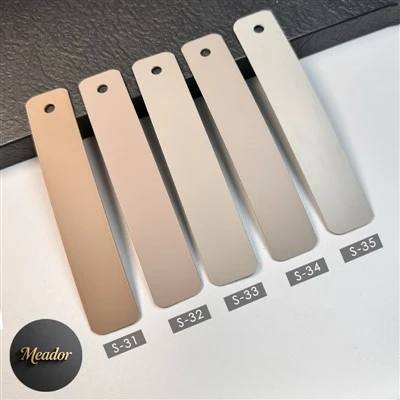
Understanding the Basics of Office Furniture Edge Banding
Before we delve into the measurement techniques, let’s briefly understand what office furniture edge banding is. Edge banding is a strip of material, such as PVC, wood veneer, or ABS, used to cover the exposed edges of furniture panels. It enhances the appearance of the furniture, protects the edges from damage, and provides a more professional and finished look.
The most common types of office furniture that require edge banding include desks, cabinets, shelves, and partitions. Each piece has different shapes and sizes, which means the measurement process may vary.
Measuring Straight Edges
The simplest type of edge to measure is a straight edge. Most office desks and cabinets have several straight edges that need to be banded.
- Using a Tape Measure: This is the most straightforward method. For a single straight edge, extend the tape measure from one end of the edge to the other. Make sure the tape measure is flush against the edge for an accurate reading. For example, if you’re measuring the front edge of a desk, start from one corner and measure all the way to the opposite corner.
- Accounting for Multiple Straight Edges: In many cases, a piece of furniture may have multiple straight edges. For a rectangular desk, you’ll need to measure all four sides. Add the lengths of all the straight edges together to get the total length of edge banding required. Suppose a desk has a length of 180 cm and a width of 80 cm. The total length of edge banding needed for the perimeter would be (2\times(180 + 80)=2\times260 = 520) cm.
Measuring Curved Edges
Some office furniture, especially in modern and contemporary designs, may have curved edges. Measuring curved edges requires a bit more patience and a different technique.
- Flexible Measuring Tape: A flexible measuring tape is your best friend when it comes to curved edges. Wrap the tape measure along the curve of the edge, following its contour precisely. Take your time to ensure that the tape measure is in contact with the entire edge. If the curve is smooth, you can get a fairly accurate measurement this way.
- String and Ruler Method: If you don’t have a flexible measuring tape, you can use a piece of string. Place the string along the curved edge, matching its shape. Mark the points on the string where it starts and ends. Then, straighten the string and measure it with a ruler. This method may have a slight margin of error, but it’s still a viable option.
Measuring Angled Edges
Office furniture may also have angled edges, such as those on triangular desks or the corners of cabinets with angled cuts.
- Measuring Each Segment: Break down the angled edge into smaller straight segments. Measure each segment separately with a tape measure and then add up the lengths of all the segments. For example, if an angled edge can be divided into three straight segments of lengths 20 cm, 30 cm, and 15 cm, the total length of the edge banding for that edge would be (20+30 + 15=65) cm.
- Using Protractors for Accuracy: In some cases, especially when dealing with precise angles, you may want to use a protractor. Measure the length of each angled section taking into account the angle and the length of the hypotenuse (if applicable). This method is more suitable for furniture manufacturers who need highly accurate measurements for mass – production.
Special Considerations
- Overlap and Waste: When calculating the length of edge banding, it’s important to account for overlap. Usually, a small overlap of about 1 – 2 cm at the joints is recommended to ensure a seamless finish. Additionally, factor in some extra length for waste. There may be some cutting errors or damaged sections during the installation process. A good rule of thumb is to add 5 – 10% extra length to your total measurement.
- Mitered Corners: For furniture with mitered corners (where the edges meet at a 45 – degree angle), the measurement needs to be adjusted. Measure the length of each edge up to the point of the miter. When ordering the edge banding, make sure to specify that you need mitered cuts. Some edge banding suppliers can provide pre – cut mitered pieces, which can save a lot of time and effort during installation.
Tips for Accurate Measurements
- Measure Twice, Cut Once: This old adage holds true for edge banding measurement. Double – check all your measurements to avoid costly mistakes. If possible, have a second person verify your measurements as well.
- Use the Right Tools: Invest in high – quality measuring tools. A good tape measure, flexible measuring tape, or ruler can make a big difference in the accuracy of your measurements.
- Take Notes: Keep a detailed record of all your measurements. Label each piece of furniture and the corresponding edge banding lengths. This will help you when you’re ordering the edge banding and during the installation process.
Ordering the Right Amount of Edge Banding
Once you’ve calculated the total length of edge banding needed, it’s time to place your order. When dealing with a supplier, be sure to provide accurate information about the type, color, and width of the edge banding you need. Also, mention the extra length you’ve added for overlap and waste.
At our company, we take pride in providing high – quality office furniture edge banding in a wide range of materials, colors, and widths. Our team of experts is always ready to assist you with any questions you may have about measurement or installation.
If you’re in the process of furnishing an office, renovating a workspace, or manufacturing office furniture, accurate edge banding measurement is essential. Don’t hesitate to reach out to us to discuss your specific needs. We’re here to help you get the perfect edge banding for your project.
In conclusion, measuring the length of office furniture edge banding is a process that requires attention to detail and the right techniques. By following the methods outlined in this blog, you can ensure that you order the correct amount of edge banding, resulting in a professional and polished finish for your office furniture.

Contact us today to start your procurement process and let’s work together to create beautiful and functional office furniture.
Panel Furniture Edge Banding References
- "Furniture Manufacturing Handbook", various authors, a comprehensive guide that includes details on edge banding and measurement techniques.
- "Interior Design – Practical Measurment for Office Furniture", Design Institute Publications, which provides practical advice on measuring different types of office furniture components.
Linyi Meador New Materials Co., Ltd.
As one of the most experienced office furniture edge banding manufacturers and suppliers in China, we offer a wide range of products with superior quality. We warmly welcome you to buy bulk premium office furniture edge banding from our factory. Good service and punctual delivery are available.
Address: Meidu New Materials, No. 66 Zhenxing Road, Tanyi Town, Feixian County, Linyi City, Shandong Province
E-mail: meador@zohomail.cn
WebSite: https://www.meadorfactory.com/
