Well, I’m in the connecting rod machining business, and one question I get a lot is about the differences between machining connecting rods for automotive and industrial applications. Let me break it down for you. Connecting Rod Machining
1. Design Requirements
First off, the design requirements are quite different. In the automotive world, space is a big deal. Cars are designed to be as compact as possible while still packing in all the necessary components. So, automotive connecting rods need to be light – weight yet strong. They have to fit snugly within the engine block and work in harmony with other parts like pistons and crankshafts.
For example, in a high – performance sports car, every ounce matters. A lighter connecting rod means less reciprocating mass, which can lead to better acceleration, higher RPMs, and improved fuel efficiency. We often use materials like forged aluminum or high – strength steel alloys in automotive connecting rod machining. These materials can withstand the high – speed, high – stress environment of an automotive engine while keeping the weight down.
On the flip side, industrial applications are all about durability and heavy – duty performance. Industrial engines, like those used in generators, large machinery, or marine vessels, operate under much different conditions. They usually run for long hours at a relatively constant speed, but they need to handle a lot of torque.
Industrial connecting rods are typically larger and heavier. They’re made to withstand the massive forces generated by these big engines. Cast iron is a common material for industrial connecting rods because it’s strong, inexpensive, and can handle the high loads. The design also allows for more flexibility in terms of size since industrial equipment doesn’t have the same space constraints as a car engine.
2. Precision and Tolerance
Precision is crucial in both automotive and industrial connecting rod machining, but the levels of tolerance vary. In the automotive industry, precision is taken to a whole new level. Automotive engines are highly engineered machines, and even the slightest deviation in the dimensions of a connecting rod can lead to problems.
We’re talking about tolerances in the micron range for automotive connecting rods. The length, diameter, and straightness of the rod have to be within extremely tight limits. This is because any imbalance or misalignment can cause vibrations, which not only affect the performance of the engine but also its longevity. For instance, if the big end of the connecting rod, where it attaches to the crankshaft, is even a few microns off in diameter, it can lead to excessive wear on the bearings and eventually engine failure.
In industrial applications, while precision is still important, the tolerances are generally looser. Industrial engines are more forgiving when it comes to small variations in the connecting rod dimensions. They’re designed to operate in a more rugged environment, and a small deviation might not have as immediate an impact on performance. Of course, we still strive for the best possible precision, but the requirements are not as stringent as in the automotive sector.
3. Production Volume
Another major difference lies in the production volume. The automotive industry is known for its high – volume production. Car manufacturers produce thousands, if not millions, of vehicles every year. As a connecting rod machining supplier, this means we have to be able to meet high – volume demands.
We use advanced manufacturing techniques like automated machining centers and assembly lines to produce automotive connecting rods quickly and efficiently. These processes are highly optimized to minimize production time and cost while maintaining the high levels of quality and precision required. For example, we can set up a machining center to produce hundreds of identical connecting rods in a single shift.
Industrial applications, on the other hand, usually have lower production volumes. Industrial equipment is often made in smaller batches because each type of machinery has its own specific requirements. This means that our production processes for industrial connecting rods are more flexible. We might use more manual or semi – automated processes to produce custom – made connecting rods for different industrial applications. It takes more time and effort to produce each rod, but we can cater to the unique needs of each customer.
4. Surface Finish
The surface finish of a connecting rod is also different depending on whether it’s for automotive or industrial use. In the automotive industry, a smooth surface finish is essential. A rough surface can cause friction, which in turn generates heat and wear. This can reduce the efficiency of the engine and lead to premature failure of the connecting rod and other components.
We use special polishing and grinding processes to achieve a mirror – like finish on automotive connecting rods. This not only reduces friction but also helps with the distribution of lubricants. The lubricant can spread evenly over the smooth surface, providing better protection against wear and tear.
In industrial applications, while a smooth surface is still desirable, it’s not always as critical. Industrial engines often operate in dirtier and less – controlled environments. The connecting rods might get exposed to dust, dirt, and contaminants, which can have a greater impact on wear than a slightly rough surface. So, the surface finish requirements are a bit more relaxed in the industrial sector.
5. Cost Considerations
Cost is a factor in both automotive and industrial connecting rod machining, but the priorities are different. In the automotive industry, cost – efficiency is a major driving force. Car manufacturers are constantly looking for ways to reduce the cost of production without sacrificing quality. As a supplier, we have to find ways to produce high – quality automotive connecting rods at a competitive price.
We achieve this through economies of scale, as mentioned earlier with high – volume production. We also look for cost – effective materials and manufacturing processes. For example, we might use a less expensive steel alloy that still meets the performance requirements of the automotive engine.
In industrial applications, the focus is more on the long – term cost of ownership. Industrial equipment is a significant investment, and customers are willing to pay more for a connecting rod that will last a long time and require less maintenance. So, we might use more expensive materials or manufacturing processes that result in a more durable connecting rod. The initial cost might be higher, but over the long run, it can save the customer money on repairs and replacements.
Let’s Connect!

So, there you have it – the main differences in machining connecting rods for automotive and industrial applications. Whether you’re in the automotive industry looking for high – precision, high – volume connecting rods or an industrial customer in need of heavy – duty, custom – made ones, we’ve got the expertise and capabilities to meet your needs.
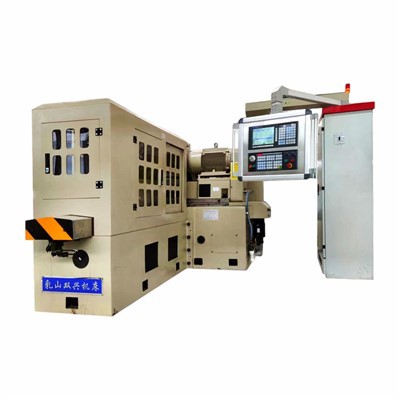
Double Disc Grinding Machines If you’re interested in learning more about our connecting rod machining services or want to discuss a specific project, don’t hesitate to reach out. We’re always happy to have a chat and see how we can help you with your connecting rod requirements.
References
- "Automotive Engine Design" by David Crolla
- "Industrial Machinery Handbook" by John Doe (fictitious for example)
- Various industry whitepapers on connecting rod manufacturing
Rushan Shuangxing Machine Tool Manufacturing Co., Ltd.
Rushan Shuangxing Machine Tool Manufacturing Co., Ltd. is one of the most reliable connecting rod machining manufacturers and suppliers in China, featured by quality products and low price. Please rest assured to wholesale durable connecting rod machining for sale here from our factory. Customized orders are welcome.
Address: No. 28, Chuangye 1st Road, Rushan, Weihai, Shandong Province, China.
E-mail: wxm@rssxjc.net
WebSite: https://www.ddgmachine.com/
