Hey there! As a thermocouples supplier, I often get asked a bunch of questions about these nifty little devices. One question that pops up quite a bit is, "What is the maximum current that thermocouples can handle?" Well, let’s dive right into it. Thermocouples

First off, let’s talk a bit about what thermocouples are. For those who aren’t in the know, a thermocouple is a sensor used to measure temperature. It’s made up of two different types of metals, joined together at one end. When there’s a temperature difference between the joined end (the hot junction) and the other end (the cold junction), it creates a voltage. This voltage can then be measured and used to figure out the temperature.
Now, back to the main question: the maximum current. The maximum current that a thermocouple can handle isn’t a one – size – fits – all answer. It depends on a whole bunch of factors.
One of the big factors is the type of thermocouple. There are several types out there, like Type K, Type J, Type T, and so on. Each type is made from different combinations of metals, and these metals have different electrical properties. For example, Type K thermocouples are made of chromel (an alloy of nickel and chromium) and alumel (an alloy of nickel, manganese, aluminum, and silicon). These metals have a certain resistance, and this resistance plays a role in how much current they can handle.
The cross – sectional area of the thermocouple wires also matters. If the wires are thicker, they can generally handle more current. It’s kind of like a water pipe. A wider pipe can carry more water than a narrow one. Similarly, a thermocouple with thicker wires can carry more current.
Another factor is the temperature. Thermocouples are designed to work within a certain temperature range. If the temperature gets too high, it can affect the electrical properties of the metals in the thermocouple. High temperatures can increase the resistance of the wires, which means they can handle less current. For instance, if a thermocouple is operating at its upper temperature limit, it might not be able to handle as much current as it could at a lower temperature.
The length of the thermocouple wires is also important. Longer wires have more resistance. So, if you have a really long thermocouple, the resistance will be higher, and it will be able to handle less current compared to a shorter one.
Let’s look at some general guidelines. For most standard thermocouples used in common industrial applications, the maximum current is usually in the range of a few milliamperes. For example, in a typical Type K thermocouple used for measuring temperatures in a factory oven, the maximum current might be around 5 – 10 milliamperes.
But if you’re using a thermocouple in a high – power application, like in a large – scale power plant or a high – temperature furnace, things get a bit more complicated. In these cases, the thermocouples might be specially designed to handle higher currents. They could have thicker wires, better insulation, and be made from more robust materials.
So, how do you know if you’re pushing the thermocouple beyond its current limit? Well, there are a few signs. One is overheating. If the thermocouple starts to get really hot, it could be a sign that too much current is flowing through it. Overheating can damage the thermocouple, and it can also affect the accuracy of the temperature measurement.
Another sign is a change in the output voltage. If the voltage output of the thermocouple starts to fluctuate or doesn’t match the expected values based on the temperature, it could be because of excessive current.
As a thermocouples supplier, I always recommend doing a bit of research and consulting with an expert before using a thermocouple in a new application. We can help you choose the right type of thermocouple based on your specific requirements, including the maximum current you need it to handle.
We’ve got a wide range of thermocouples in our inventory. Whether you need a small, low – current thermocouple for a laboratory experiment or a high – power thermocouple for an industrial process, we’ve got you covered.
If you’re in the market for thermocouples and have questions about the maximum current or any other aspect, don’t hesitate to reach out. We’re here to help you make the best choice for your application. Whether you’re a small business owner, a researcher, or part of a large industrial operation, we can provide you with the right thermocouples and the support you need.
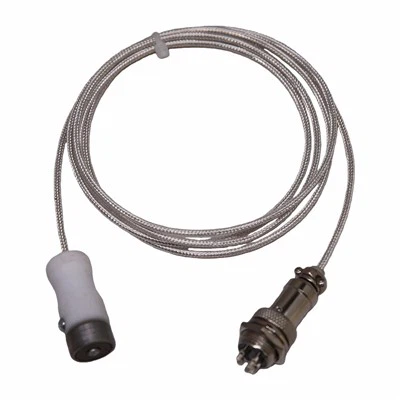
So, if you’re looking to purchase thermocouples, just drop us a line. We’ll be more than happy to have a chat about your needs and find the perfect thermocouples for you.
Compensating Conductor References:
- "Thermocouples: Theory and Practice" by John R. Cimbala
- "Industrial Temperature Measurement" by David W. Spitzer
Jiangsu Zhaolong Electric Co., Ltd.
We’re well-known as one of the leading thermocouples manufacturers and suppliers in China, featured by quality products and low price. Please feel free to buy customized thermocouples made in China here from our factory. Contact us for more details.
Address: No. 80, Zhangguo Chang’an Road, Dainan Town, Xinghua City, Jiangsu Province
E-mail: 180193845@qq.com
WebSite: https://www.cnzhaolong.com/
