If you’ve ever worked with titanium alloy, you know it’s the kind of material that makes shop floor managers and machinists pause. It’s strong, lightweight, corrosion-resistant, and used in everything from aerospace turbine blades to medical implants—but its combination of high tensile strength and low thermal conductivity makes it a nightmare to cut with standard tools. For years, the go-to methods were expensive milling operations, specialized carbide-tipped blades, or hand-fed bandsaws that required constant operator attention. As an automatic band saw supplier, I get asked this question at least once a week: Can an automatic band saw actually cut titanium alloy effectively, without wasting money on blades or risking downtime? The short answer is yes—but there’s a lot more to it than just plugging in a machine and hitting start. Automatic Band Saw

First, let’s break down why titanium is so tricky. Unlike steel, which heats up quickly and dissipates heat easily, titanium traps heat at the point of cut. That means any dull blade, incorrect speed, or too much pressure doesn’t just slow the cut—it can weld the titanium to the blade, fray the teeth, or cause the material to crack. Add to that titanium’s tendency to work harden: when you apply force to its surface, it forms a thin, extremely tough layer that’s hard to cut through, even with the right tools. A bandsaw, especially an automatic one, addresses a lot of these pain points by delivering consistent, controlled force and speed—something that hand-fed or manual machines can never match. But you can’t use the same bandsaw setup you use for 6061 aluminum or mild steel for titanium.
When I first started selling automatic band saws 12 years ago, we ran into a lot of customers who tried to retrofit their existing steel-cutting saws for titanium and came back frustrated. They’d burn through a new blade in 10 or 15 cuts, deal with frequent breakdowns, and end up with uneven cuts that required extra machining work. Over time, we worked with a handful of aerospace and medical part manufacturers to tweak our machine configurations, and that’s where we learned the nuances that make automatic band saws work for titanium. Let’s go through the key components that make this possible.
First, blade selection. This isn’t the time to grab a generic bi-metal blade off the shelf. For titanium, you need a blade with a high cobalt content—M42 or M51 grade, to be specific. These blades have much higher hot hardness, so they don’t lose their edge when that cut point heat builds up. The tooth pitch matters too: for most titanium cuts, you want a variable tooth pitch, meaning the spacing between teeth changes along the blade. Variable pitch reduces vibration, which is a huge issue when cutting a material as stiff as titanium. If your blade has evenly spaced teeth, it can catch on the titanium’s hard surface layers, leading to chipped teeth or uneven cuts. We recommend a 3-4 TPI (teeth per inch) range for solid titanium bars and 6-8 TPI for thin titanium sheets—this gives the right amount of cutting edge without overloading the blade.
Next, the automatic band saw’s feed system. A lot of people think “automatic” just means the machine feeds the blade on its own, but modern automatic models have programmable feed rates and pressure control that are non-negotiable for titanium. When cutting, you don’t want to push too hard— that increases heat and work hardening—but you also don’t want to feed too slowly, which lets the blade rub instead of cut. Our automatic saws let operators input the titanium material type, thickness, and blade grade, and the machine automatically adjusts feed pressure and speed to stay in the optimal range. For example, cutting a 4-inch solid titanium bar calls for a slow, steady feed (around 50 to 75 feet per minute) with consistent downward pressure. Manual saws can’t maintain that kind of consistency; an operator will either rush through a cut and damage the blade, or take too long and end up with heat buildup.
Coolant is another big one, and it’s something we always emphasize to customers cutting titanium. Titanium doesn’t dissipate heat, so your coolant isn’t just for lubrication—it’s for carrying that heat away from the cut. We recommend using a synthetic, high-pressure coolant (usually 5 to 10% concentration) that’s directed directly at the blade-to-workpiece interface. Automatic band saws can be configured with closed-loop coolant systems that don’t waste fluid, and some of our models even have multiple coolant nozzles to ensure every tooth stays lubricated. We’ve had customers who tried using plain water or old-style emulsions for titanium cuts and saw blade life drop by 70%—switching to our recommended coolant setup brought blade life back to around 40 to 50 cuts per blade, which is more than enough to justify the investment.
Now, let’s talk about when an automatic band saw might not be the best choice. If you’re cutting extremely thin titanium foils (less than 1mm thick) or highly complex shapes with tight tolerances, a bandsaw might not give you the precision you need—milling or waterjet cutting would be better. But for the vast majority of titanium cutting jobs: solid bars up to 20 inches in diameter, plates, forgings, or tube stock, an automatic band saw is often more cost-effective than other methods. A customer of ours in the aerospace industry used to use a CNC milling machine to cut titanium turbine blades, which took 2 hours per part and cost $150 per hour in labor and tooling. After switching to our automatic band saw, they cut each part in 20 minutes, and blade costs were less than $10 per cut—total cost per part dropped by 70%, and they eliminated the frequent tool changes that were causing downtime.
I should also address a common myth: some machinists think titanium is too abrasive for bandsaw blades, but that’s only true if you’re using the wrong setup. We’ve seen blades last for hundreds of titanium cuts when the machine is calibrated correctly. The key is that the automatic system prevents the two most common causes of premature blade wear: inconsistent feed and lack of coolant. Hand-fed saws often have feed pressure that fluctuates, leading to “chatter” that wears teeth down quickly. Automatic saws eliminate that fluctuation, so the blade cuts smoothly instead of bouncing against the titanium.
Another factor is machine rigidity. Automatic band saws designed for metal cutting, especially titanium, need a heavy frame to reduce vibration. Our models have welded steel frames that weigh 2,000 to 5,000 pounds, which keeps the blade stable during the cut. If you have a flimsy saw frame, even with the right blade and coolant, the vibration will cause the blade to wander or break mid-cut. That’s why so many cheap, import automatic saws don’t work well for titanium—they cut corners on frame construction and feed systems to keep costs low. As a supplier, we engineer every saw to handle the stress of hard materials like titanium, not just soft aluminum.
What about maintenance? An automatic band saw for titanium doesn’t require any special maintenance beyond what we recommend for any metal saw, but there are a few small adjustments that make a big difference. You should inspect the blade guides every 50 cuts to make sure they’re not worn—worn guides let the blade flex, which leads to uneven cuts and blade damage. We also recommend tensioning the blade correctly: titanium needs higher blade tension than steel, usually around 25,000 to 30,000 psi. Most automatic saws have a digital tension gauge, so operators don’t have to guess—they just input the correct tension for titanium, and the machine does the rest. That’s another advantage of automatic systems over manual ones: tension is consistent every time, so you don’t get variable tension that risks blade breakage.
I know it can feel like a big investment to upgrade from your current saw to an automatic band saw for titanium, but the numbers add up fast. Let’s do a quick example: a shop cutting 1,000 titanium bars a month, each 6 inches in diameter. With a manual saw, blade life might be 10 cuts, so that’s 100 blades a month at $50 each = $5,000 in blade costs. Downtime from broken blades or bad cuts might add another $2,000 a month in lost labor. With an automatic saw, blade life jumps to 50 cuts, so only 20 blades a month = $1,000, and downtime drops to almost nothing. Even if the saw costs $20,000, that pays for itself in three months. We have customers who saw a return on investment in as little as six weeks, depending on their volume.
Of course, no two operations are the same. Some customers cut mostly titanium, so they want a saw dedicated to that material. Others cut a mix of titanium, steel, and aluminum, so our band saws can be programmed to switch between materials with the touch of a button—adjusting blade, speed, feed, and coolant automatically. That versatility is a huge plus; you don’t have to buy a separate saw for titanium. We work with every customer to set up their saw for their specific titanium application, whether that’s small medical implants or large aerospace forgings.
I’ve seen too many shops write off bandsaws for titanium because they tried a setup that was wrong for the material. It’s not that bandsaws can’t handle titanium—it’s that the wrong bandsaw, blade, or process can’t. As someone who’s been in the Automatic Band Saw industry for over a decade, I’ve tested hundreds of setups, and I can tell you: a well-configured automatic band saw is one of the most efficient ways to cut titanium. It’s fast, cost-effective, and produces consistent, clean cuts that need minimal additional machining.
If you’re currently struggling with slow cuts, high tooling costs, or downtime from your current method of cutting titanium, an automatic band saw is worth exploring. We don’t just sell machines—we work with customers to customize their setup, train their operators, and provide ongoing support to make sure their titanium cuts are as efficient as possible. Whether you’re cutting 10 parts a month or 1,000, we can help you find the right automatic band saw for your needs.
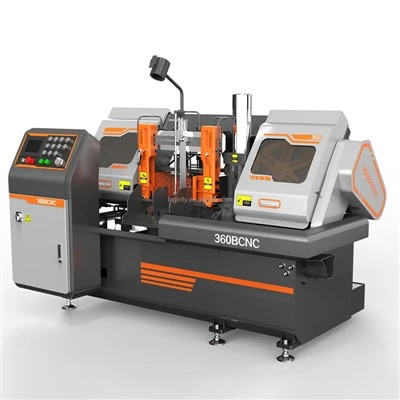
If you’re ready to stop wasting money on blades and downtime, reach out to us to discuss your titanium cutting requirements. We’ll walk you through our machine options, help you configure the perfect setup for your parts, and answer any questions you have about using automatic band saws for titanium.
High Speed Circular Saw Machine References
- ASM International. (2008). Titanium Alloys: A Guide for the Processor and User. ASM International.
- Band Saw Blade Manufacturers Association. (2021). Best Practices for Cutting Exotic Metals. BSMBA.
- Aerospace Industries Association. (2019). Titanium Machining Guidelines for Commercial Aircraft Parts. AIA.
- Modern Machine Shop. (2020). “Cutting Titanium with Band Saws: Myth vs. Reality.” Modern Machine Shop, Vol. 53, No. 8.
Shanghai Loginfly Sawing Technology Co., Ltd.
As one of the most professional automatic band saw manufacturers and suppliers in China, our products have good reputation in the market. We warmly welcome you to wholesale premium automatic band saw from our factory. If you have any enquiry about cooperation, please feel free to email us.
Address: Room 506 NO.655 Yinxiang Road,Nanxiangtown,Jiading District, Shanghai.China
E-mail: sales01@loginfly.com
WebSite: https://www.loginflysaws.com/
