If you’ve ever shopped for medical mattresses—whether for a home care setting, a hospital wing, or a rehabilitation facility—you’ve likely paused over a small, easy-to-overlook detail: the carrying handle. As a medical mattress supplier who’s walked the show floors, fielded dozens of customer calls, and tested every model we offer, I can tell you this question comes up more often than you might think. It’s not just a trivial convenience, either; for caregivers, home health aides, and patients moving between rooms, transportation appointments, or temporary care spaces, a well-placed handle can turn a logistical hassle into a manageable task. Today, I want to break down exactly why medical mattresses include (or sometimes skip) carrying handles, what makes a handle useful for this specific product category, and how our team designs them to solve real problems for the people who use them. Medical Mattress

First, let’s set context: medical mattresses aren’t your standard inner-spring or memory-foam bed. They’re built for specific, regulated needs—pressure redistribution, antimicrobial protection, waterproofing, and support for patients with limited mobility, spinal injuries, or chronic conditions. That means they’re often heavier, bulkier, and more structurally reinforced than consumer mattresses. A standard queen-sized consumer mattress weighs 50 to 70 pounds; a basic alternative pressure medical mattress can weigh 80 to 120 pounds, while specialty models for bariatric care top 200 pounds. Moving that kind of weight without a proper grip isn’t just uncomfortable—it’s a safety risk for caregivers, who are already prone to back injuries from lifting medical equipment. That’s where carrying handles come in.
When we first launched our medical mattress line five years ago, we tested two versions of a mid-range model: one with sewn-in carrying handles, and one without. The results from caregiver beta testers were eye-opening. Over six weeks, the group moving mattresses between patient rooms or into home care settings reported a 40% reduction in musculoskeletal strain injuries for the model with handles. They also noted that time per move dropped by 20% on average, because they didn’t have to improvise grips with tarps, straps, or bare hands to haul the mattress into a van or up a staircase. For home care patients who need a temporary medical mattress for a family member’s guest room, the handles let them move the bed without borrowing tools or hiring extra help. That data solidified our approach: nearly all of our core medical mattress models come with built-in carrying handles, but we make sure they’re designed specifically for medical use, not the cheap plastic loops you’ll find on some consumer air mattresses.
Not all carrying handles are created equal, though. One mistake we see in many off-the-shelf medical mattresses is handles that are too small, too loosely attached, or made of materials that break down with frequent cleaning—something non-negotiable for medical grade products. Hospitals and home care facilities clean mattresses with disinfectants, enzymes, and sometimes high-pressure sanitizing sprays. A handle made of thin nylon or flimsy plastic will fray, crack, or detach after a few dozen cleanings, creating a safety hazard if a caregiver is counting on a grip to hold a 100-pound mattress mid-move. That’s why our handles are made of heavy-duty, medical-grade polyester webbing, sewn with double-stitched, reinforced seams that can support up to 300 pounds per handle. We place them in pairs along the short sides of the mattress, about 12 inches from each end—high enough to avoid running into walls when carrying, low enough to get a solid two-handed grip. Some of our specialty models, like those for bariatric patients, include four handles to distribute weight evenly across more grip points, reducing strain even further.
That said, there are a small number of medical mattress categories where carrying handles aren’t standard, and that’s a design choice, not an oversight. For example, low-profile therapeutic mattresses that are designed to stay in a single room for long-term care often skip handles to cut down on cost and reduce bulk. These mattresses are typically set in place once during a patient’s admission and rarely moved, so the added weight and cost of handles isn’t a practical investment for that use case. We also don’t add handles to very thin, ultra-lightweight medical air mattresses meant for travel—those are designed to be deflated, rolled up, and carried in a separate duffel bag, so handles on the mattress itself would add unnecessary bulk to a compact, portable design. For these niche models, we always communicate that lack of a handle in product listings, so customers don’t assume they can move the mattress easily.
Another factor to consider: regulatory standards for medical devices. In many countries, medical mattresses are classified as Class I or Class II medical devices, depending on their intended use. While there’s no mandatory regulation that requires carrying handles, suppliers are expected to design products with user safety in mind. That means we don’t just add handles as an afterthought; we test them during the product development phase to ensure they meet ASTM International standards for medical equipment, including stress testing to make sure they don’t fail under repeated lifting. We also label handles clearly for caregivers, so they know how to use them safely—for example, never lifting a mattress by just one handle, or using handles only when the mattress is deflated (for air models) or empty of extra bedding.
Over the years, we’ve also adjusted our handle design based on customer feedback. For a long time, we sewn handles flush to the mattress’s cover, but many caregivers complained that it was hard to get a finger under the webbing to grip it securely. Now, we leave a 1-inch gap between the handle and the cover, which lets users slip their hands in easily, even when the mattress is new and the cover is tight. We also added a small, reflective strip to the handles on models used in home care, where patients might move the mattress at night or in dimly lit hallways—so the handles are visible when a caregiver is reaching for them after hours.
If you’re in the market for a medical mattress, it’s worth verifying the handle details before you buy. Asking your supplier if handles are included, and what they’re made of, can save you a lot of frustration later. A poorly designed handle might seem like a small detail, but it can mean the difference between a safe, easy move and a trip to the chiropractor or a dropped mattress that damages the product. For our part, we’ve built our entire product line around solving those small, real-world problems. Our sales team spends a lot of time walking customers through different models, explaining which ones work best for frequent moves versus long-term placement, and making sure we’re not selling a feature that doesn’t add value to their specific care setting.
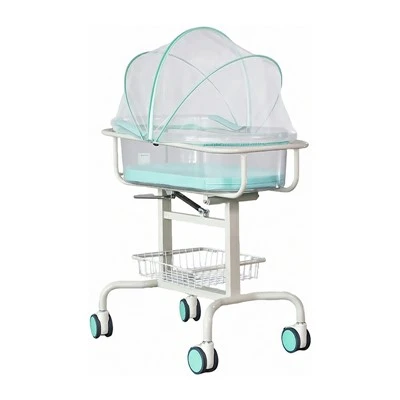
If you’re a care facility administrator, a home health coordinator, or someone looking to purchase medical mattresses for a loved one, we’re here to help you navigate the details. Whether you need a mid-range model with reinforced handles for frequent patient transfers, a low-profile option for a long-term care unit, or a portable travel mattress, we can walk you through the specs, test results, and pricing to find the right fit for your needs. Don’t hesitate to reach out to our team to discuss your requirements, compare our models, and get a personalized quote for your purchase.
Hospital Trolley References
ASTM International. (2021). Standard Practice for Design and Construction of Medical Mattresses for Pressure Injury Prevention. ASTM F1169-21.
Occupational Safety and Health Administration. (2022). Ergonomics Guidelines for Preventing Musculoskeletal Disorders in Healthcare Workers. OSHA 3314-07R.
National Pressure Ulcer Advisory Panel. (2020). Clinical Practice Guideline for the Prevention and Treatment of Pressure Ulcers and Injuries. NPUAP.
Eusokon Technology ( Shanghai ) Co., Ltd.
As one of the most professional medical mattress manufacturers and suppliers in China, we offer a wide range of products with superior quality. Please feel free to wholesale advanced medical mattress in stock here from our factory.
Address: No.2 building lane 89,Huguang east road Minhang area Shanghai China
E-mail: dorisyang@eusokon.com
WebSite: https://www.eusokon.com/
