If you’re running a manufacturing plant, food processing facility, warehouse, or even a commercial workshop, you know stinky fumes aren’t just annoying—they can mess with worker morale, trigger health issues, and even cause compliance headaches if they build up. As an industrial exhaust fan supplier, I get asked all the time: “Which exhaust fans actually work for getting rid of odors, not just blowing them around?” The truth is, not all industrial exhaust setups are created equal. Picking the wrong one will just move the smell from one corner to another, which defeats the whole purpose. Let’s break down the types that actually deliver for odor removal, why they work, and what to look for when picking one. Industrial Exhaust Fan

First off, let’s get one thing straight: odor removal with exhaust fans isn’t just about moving air. You need fans that pull in the smelly air from its source, don’t let it recirculate, and either vent it outside safely or filter it before releasing it back (for places where venting out is tricky, like urban facilities or facilities with strict emissions rules). Let’s start with the type most people think of when they hear “industrial exhaust” — axial flow exhaust fans. These are the big, tube-shaped fans you see mounted on warehouse walls, right?
Axial fans work by moving air parallel to the fan’s shaft, so they push a ton of air quickly, which makes them perfect for high-volume, low-pressure areas where odors are spread out. For example, if you’ve got a metal fabrication shop with welding fumes mixed with paint solvents, or a food processing plant where raw meat or fish is being processed (that smell can cling to everything if it lingers), axial fans move air so fast they don’t give odors time to settle. But here’s the catch: not all axial fans are equal for odor removal. You want ones with a high CFM (cubic feet per minute) rating, because lower CFM just isn’t enough to pull dense, heavy odors. I’ve seen a lot of customers skimp here, buying a cheap axial fan that only moves 5,000 CFM, and wonder why the smell is still hanging around. For most mid-sized facilities, you want at least 10,000 CFM for odor-heavy spaces. Also, look for axial fans with a variable speed controller—you can crank it up when odors are extra bad (like during a shift change in a bakery where dough proofing fumes kick up) and dial it back when it’s manageable, which saves on energy costs.
Next up, centrifugal exhaust fans, also called “squirrel cage” fans. These are the ones with the spiral-shaped housing and a fan wheel inside that spins to pull air into the center and push it out at a right angle. They’re quieter than axial fans, which is a big plus if you’re running a facility near residential areas or if your workers have to stay in the space while the fan’s running. More importantly, centrifugal fans generate higher static pressure, which means they can push air through ductwork easily. That’s game-changing for odor removal because if the smell is coming from a specific, contained source—like a chemical mixing station, a paint booth, or a composting bin—you can run ducts directly to that spot, and the centrifugal fan will pull that concentrated odor out before it spreads. I had a customer last year who ran a small chemical testing lab; they were using an axial fan that just blew fumes into the hallway, making the whole building smell. Switched to a centrifugal exhaust fan with 25,000 CFM and a duct that vents directly to the roof, and the complaint rate from workers dropped 90% in a week. The static pressure here is key—without it, you can’t pull air through long ducts, so the odor stays trapped in the duct instead of being removed.
Now, if you’re in a spot where you can’t vent odors outside—say, an urban manufacturing facility near a residential neighborhood, or a facility that processes organic waste and can’t release those fumes into the air—you need a different type: cartridge filter exhaust fans (sometimes called filtered exhaust fans). Wait, no, let’s get that right—specifically, industrial exhaust fans paired with cartridge odor filters, but actually, there are fans designed to integrate those filters. These fans pull air through a carbon filter (or sometimes a HEPA filter plus carbon, depending on the odor type) before releasing it back into the space. Not all filters work for all odors, though. Carbon filters are your go-to for organic odors—think food processing, livestock barns, or woodworking shop sawdust smells. If you’re dealing with chemical odors, like solvents from printing or manufacturing, you need activated carbon filters with a higher density, not the cheap residential ones. One mistake I see customers make is using a residential filter with an industrial fan, which clogs in days and stops working. Industrial-grade cartridge filters are made to handle heavy, frequent use, so they last longer and actually catch the odor molecules, not just the big particles.
Wait, there’s also roof exhaust fans—these are a subset of axial or centrifugal fans mounted on the roof, which makes them perfect for venting odors straight outside without blowing them around the building. A lot of warehouses use these because they’re easy to install on the roof, no wall penetration needed. For odor removal, roof exhaust fans work best when they’re paired with intake fans on the opposite side of the building—this creates a cross-ventilation effect that pulls every last bit of odor out. I worked with a brewery a while back that was having trouble with the smell of fermenting beer building up in the main production area. They added two roof exhaust fans (one axial, one centrifugal, because fermentation fumes are dense) and intake vents near the brewing tanks, and within a shift, the smell was gone entirely. The key with roof fans is to make sure they’re sized right—too small, and they can’t keep up with the fume production, too big, and they waste energy. For breweries, we usually recommend a CFM rating equal to 6 to 8 times the total volume of the production area, which is the standard for odor-heavy industrial spaces.
Now, let’s talk about what to avoid, because there are a lot of fans out there that sound great but don’t work for odor removal. First, don’t use standard box fans—those are for residential use, they don’t have the CFM or static pressure to move industrial-level air, so they’ll just recirculate odors. Second, don’t pick a fan based solely on price. A $200 industrial fan might seem like a steal, but it’ll clog with dust or fumes in a month, and you’ll have to replace it multiple times a year, which ends up costing more than a high-quality $1,000 fan that lasts 5 years. Also, avoid fans without motor protection—industrial odors (especially chemical ones) can damage unprotected motors, leading to breakdowns. Look for fans with totally enclosed motors, which are sealed to keep fumes and dust out—those last way longer in odor-heavy environments.
Wait, another type I should mention: explosion-proof exhaust fans, but only if you’re dealing with extremely flammable odors, like gasoline or propane fumes. If you’re in an auto repair shop, a fuel storage facility, or a chemical plant where fumes can ignite, regular fans are a huge safety risk—their motors can spark. Explosion-proof exhaust fans are designed with non-sparking components, so they won’t ignite those fumes. That’s a non-negotiable for certain industries, not just a odor removal tool, but it’s critical to call out because a lot of customers don’t realize they need that safety feature along with odor removal.
Let me share a real example to make this concrete. Last quarter, I had a customer who runs a small textile dyeing facility. Their main problem was the strong, chemical smell from dye baths, which was seeping into the adjacent office space and making their office workers sick. They tried a cheap axial wall fan, but it just blew the smell into the office, not out. Then they installed a centrifugal exhaust fan with 18,000 CFM, a 10-foot duct running directly to the dye bath tanks, and an activated carbon filter on the exhaust outlet to catch any leftover fumes. The result? The dye area’s air quality improved by 85% (we did a quick test with a portable air quality monitor they had), and the office no longer had any odor complaints. They also saved about 15% on energy because the centrifugal fan is more efficient for ductwork than a axial fan would have been.
Now, when you’re picking a fan, don’t forget to calculate your needs right. The formula isn’t just “pick the biggest CFM you can find.” You need to measure the volume of the space (length x width x height) and multiply by the number of air changes per hour (ACH) recommended for odor removal. For most industrial spaces with strong odors, that’s 8 to 12 ACH. So if your space is 10,000 cubic feet, you need 80,000 to 120,000 CFM of airflow (since CFM = (volume x ACH) / 60). That’s a basic calculation, but it’s way more accurate than just guessing. A lot of suppliers will help you run that calculation if you give them the dimensions of your space and the type of odors you’re dealing with—we do, anyway.
Also, think about maintenance, because a fan that’s not maintained won’t work for odor removal. Cartridge filters get clogged with odor particles, so you need to replace them every 3 to 6 months, depending on how heavy the odors are. Axial and centrifugal fans need their blades cleaned regularly too—if dust or fumes build up on the blades, they can’t move air as effectively, which makes odor removal worse. That’s why we always tell customers to factor in maintenance costs when they’re budgeting for a fan, not just the upfront price.
Wait, let’s circle back to the types again to make it easy to remember, based on use case: if you have a large, open space with spread-out odors (warehouse, welding shop, retail bakery), go for axial flow exhaust fans. If you have a contained odor source, long duct runs, or need low noise (chemical lab, paint booth, confined production area), centrifugal fans are your pick. If you can’t vent outside (urban facility, organic waste processing), go for a filtered exhaust fan with industrial carbon cartridges. If you’re dealing with flammable fumes, explosion-proof exhaust fans are non-negotiable. And roof exhaust fans work great as a supplement to either of these, for venting odors straight out of the building.
Now, I know this is a lot, but the biggest takeaway is that odor removal with industrial exhaust fans isn’t one-size-fits-all. A lot of customers reach out to me saying their old fan “doesn’t work for smells” and it’s almost always because they picked the wrong type. Too many people just grab whatever fan is cheapest on the internet, not thinking about their specific odor issue or the layout of their facility. That’s where we come in—we don’t just sell fans, we help you figure out exactly what you need to get rid of that stubborn odor, safely and efficiently.
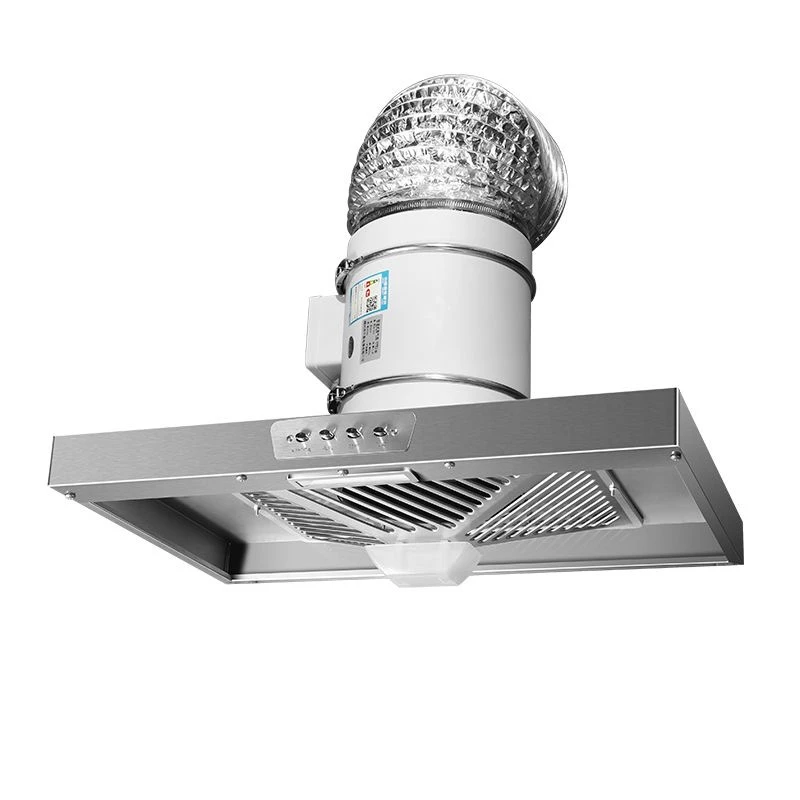
If you’re tired of smelling like your factory’s product at the end of every shift, or dealing with complaints from workers or neighbors about odors, let’s chat. We can help you calculate your CFM needs, pick the right fan type for your space and odor type, and even go over maintenance tips to keep it running smoothly for years. No pressure, just straight talk about what works, what doesn’t, and how to make your space more comfortable and compliant.
Range Hood References:
- Occupational Safety and Health Administration (OSHA) Industrial Ventilation Guidelines for Odor Control
- American Society of Heating, Refrigerating and Air-Conditioning Engineers (ASHRAE) Standard 62.1 for Industrial Ventilation
- National Fire Protection Association (NFPA) 70 for Explosion-Proof Electrical Equipment in Industrial Facilities
Jiaxing Zenterest Import & Export Co., Ltd.
With abundant experience, we are one of the most professional industrial exhaust fan manufacturers and suppliers in China. Please feel free to wholesale high quality industrial exhaust fan made in China here from our factory. We also accept customized orders.
Address: Room 101-3, Building 46, Zhifu Center, Gaozhao Subdistrict, Xiuzhou District, Jiaxing City, Zhejiang Province, P.R.China
E-mail: bonnie.wu@zenterestvent.com
WebSite: https://www.zenterestvent.com/
