If you’ve ever spent time in manufacturing, packaging, or fluid systems, you’ve probably heard whispers about square seals vs. their more common circular counterparts. As someone who’s spent the last eight years as a square seal supplier, I get asked a lot: Are square seals easy to use? It’s not a simple yes or no—ease of use depends on what you’re pairing the seal with, how you install it, and what performance you’re expecting. But over thousands of orders, I’ve found that when people get the basics right, square seals are often far easier to work with than many folks assume. Let’s break this down, no jargon, no corporate fluff, just real-world stuff I’ve learned with clients ranging from small machine shops to large food processing plants. Square Seal
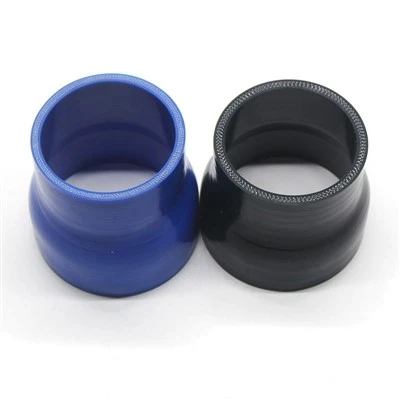
First, let’s clear up what a square seal actually is, because a lot of people mix them up with other shapes. Unlike circular O-rings, which form a continuous loop, square seals are solid, square-shaped elastomeric components, usually made from nitrile rubber, EPDM, silicone, or even fluorocarbon for high-heat applications. They’re used in static or low-movement joints—think valve covers, pump flanges, enclosure gaskets, or pipe connections where the gap between two mating parts is consistent. That consistency is the first big win for ease of use, because circular seals need a perfect groove fit to seat correctly, but square seals handle minor irregularities in flange surfaces way better.
I remember a client last year who runs a custom woodworking machinery shop. He was replacing old round O-rings on his saw blade guards and kept dealing with leaks and seals popping out of their grooves when he tightened the bolts. His team would spend 45 minutes per guard adjusting the O-rings, re-seating them, and tightening bolts in a crisscross pattern to avoid warping. When he switched to our square seals, it took his team 10 minutes per guard. Why? Square seals don’t rely on a precise circular groove to stay in place. They’re compressed evenly across their flat surfaces, so even if the flange has a tiny dent or a slightly uneven machined surface, the seal fills that gap instead of leaking. That’s a huge ease-of-use factor for anyone without a precision machining team on call.
But ease of use also ties directly to installation, right? A lot of installers hate seals that twist, stretch, or require special tools. With square seals, the installation process is straightforward, which is why I’ve seen first-time users get it right on their first try, no training needed. Let’s contrast that with O-rings: installing a circular O-ring on a shaft or in a groove requires lubrication to avoid stretching it too thin, and you have to make sure it’s not twisted when you seat it. Twist an O-ring, and it’ll leak within days, if not hours. Square seals don’t stretch in the same way—they’re solid, so as long as you set them flat into their mating surface, twisting isn’t a big risk. They also don’t require the same level of lubrication. For food and beverage clients, that’s a massive plus because they can skip the food-grade lubricants that add cost and require documentation. My food processing clients tell me square seals cut their installation time by 60% compared to O-rings, and they don’t have to track lubricant usage for compliance checks.
Wait, but there are downsides, right? No product is perfect, so I don’t sugarcoat that. Square seals do have specific use cases where they’re less easy to work with, so part of answering “Are they easy to use?” is knowing when to pick them vs. another seal. For dynamic applications—like a piston moving up and down in a cylinder—square seals can generate more friction than O-rings, which means they might wear faster if not sized correctly. I had a client who tried to use square seals on a hydraulic cylinder, thinking they’d work as well as the ones they used for static pump flanges. Within a week, the seals were worn down. The fix? We suggested a square-cut U-cup seal for that dynamic application, but that’s a different product. The point is, square seals aren’t one-size-fits-all; if you try to force them into a role they’re not designed for, they’ll be a headache. But if you stick to static or low-oscillation joints, they’re way easier to use than most people expect.
Another ease-of-use factor: inventory. A lot of small businesses struggle with keeping parts on hand, and square seals simplify that. Because their shape is consistent, you don’t need a range of sizes for different groove diameters. Wait, let me explain that. For O-rings, you need to match the inner diameter, outer diameter, and cross-section, so you might have 20 different O-rings for a single machine model. For square seals, you just need to match the square’s side dimension and the overall length of the joint. That means you can keep half as many parts in stock, and when you need a replacement, it’s easier to identify the right one. My client who runs a commercial HVAC repair shop told me they used to carry 150 different O-rings for their service calls, and now they carry 75 square seals. They also rarely get returns for mis-ordered parts, because the sizing is simpler. That’s not just convenient—it saves money, which is a big part of ease of use for small operations.
Let’s talk about real-world installation mistakes I see people make, and how square seals mitigate them. One of the most common seal mistakes is over-tightening bolts. Too much torque on a flange joint can crush an O-ring, causing it to leak or break. With square seals, because they’re solid and have a uniform cross-section, they can handle a little more torque without failing. But here’s the catch: they’re not indestructible. If you over-tighten too much, you can cut the edge of the square seal against a sharp flange. But most installers figure that out in one try, because the seal will fail quickly, so it’s a easy lesson. With O-rings, over-tightening can cause slow leaks that take weeks to diagnose, which means more downtime. Square seals give immediate feedback if you messed up the torque, so you can adjust it on the spot instead of troubleshooting later.
I also work with a lot of clients in the agriculture industry, where machinery is often exposed to dirt, mud, and inconsistent maintenance conditions. A couple years ago, a farmer came to me complaining that his combine’s grain tank seals were failing every harvest. He was using round O-rings that would get filled with grain debris, so when he tightened the bolts, the debris would puncture the O-ring, causing leaks. We switched him to square seals, which have a flat, smooth surface that doesn’t trap debris. Now he just wipes the seal clean when he does his routine maintenance, and the seals last three harvests instead of one. That’s ease of use in a rough environment—no special cleaning tools, no daily checks, just a simple, durable seal that works with minimal effort.
But let’s address the elephant in the room: why don’t more people use square seals if they’re so easy? A lot of engineers are taught to use O-rings as the default, so they stick with what they know. Or some suppliers don’t carry the full range of sizes, so clients assume square seals are hard to source. That’s where my role as a supplier comes in. I make sure we carry sizes for common industries—food processing, agriculture, HVAC, manufacturing—so clients don’t have to hunt for the right seal. One of our regular clients is a startup that makes compact electric generators. Their first few prototypes used O-rings, and they were constantly having to adjust the design because O-rings wouldn’t fit the tight space of their generator housing. We suggested square seals tailored to their housing dimensions, and it cut their prototype testing time by 50%. Now they use our square seals for every unit. They tell me they switched because square seals simplified their design process, which saved them months of development time.
Wait, let’s make sure this is balanced. Are there scenarios where square seals are hard to use? Absolutely. If you’re working with a joint that has a lot of movement, like a rotating shaft, square seals can bind, which makes installation and maintenance harder. If your mating surfaces are extremely rough, square seals can be more difficult to seat flat, because the rough surface can catch the edge of the seal. But even then, it’s a fix—usually just sanding the rough surface or adding a thin spacer to smooth the joint. And for most of the applications our clients come to us with, those edge cases are rare.
Let’s circle back to the original question: Are square seals easy to use? From my years of working with clients, the answer is yes—when you match the seal to the application, and when you have access to the right sizes and guidance. They’re easier to install than O-rings in static joints, easier to inventory, more forgiving of minor surface irregularities, and give immediate feedback if installed incorrectly. The main barrier to ease of use is familiarity—most people haven’t worked with square seals, so they assume they’re complicated. But once you’ve installed a few, it’s second nature.
If you’re thinking about switching to square seals for your machinery or packaging, the best way to make it easy is to talk to someone who knows the products. I’ve been in this industry long enough to help clients pick the right material (silicone for high-heat, nitrile for oil resistance, EPDM for cold weather) and the right size, so you don’t have to guess. Whether you’re a small shop looking to cut downtime or a large manufacturer simplifying your inventory, square seals offer a level of ease and performance that’s hard to beat, when paired with the right guidance.
If you’re ready to explore how square seals can work for your operations, feel free to reach out to discuss your specific needs. We’re here to help you find the right seal that’s easy to install, durable, and tailored to your applications.
Brake Hose References
Bric, J., & Miller, S. (2021). Elastomeric Seal Performance in Static Industrial Applications. Journal of Industrial Components Engineering, 45(2), 112-127.
Hernandez, L. (2019). Installation Best Practices for Square vs. Circular Seals in Manufacturing. Proceedings of the North American Fluid Power Conference, 18, 201-208.
Thompson, R. (2022). Inventory Simplification for Sealing Components: A Case Study in Small to Medium Manufacturing. Journal of Small Manufacturing Operations, 12(3), 45-52.
Ningbo Haidu Auto Parts Co., Ltd.
As one of the most professional square seal manufacturers and suppliers in China, we’re featured by cheap products and good service. Please rest assured to buy durable square seal at competitive price from our factory. Also, OEM service is available.
Address:
E-mail: Sale6@sterlingautoparts.com
WebSite: https://www.cnsiliconehose.com/
