Hey there! If you’ve ever dug deep into down-the-hole (DTH) drilling, you’ve probably heard the term “polarization of a DTH sub adapter” thrown around by the rig crew, the parts guys, or maybe even that one engineer who’s always got a grease-stained notebook tucked in his coverall pocket. When I first started out as a supplier of these little (but super critical) adapters, I’ll admit, I kind of glossed over it at first. I thought, “It’s just a connector, right? How hard can it be?” Spoiler alert: it’s way more important than that—and if you’re in the drilling game, getting this wrong can turn a smooth hole into a nightmare. Today, I’m breaking this down like I would to a new hire who’s staring at a pile of adapters wondering which way is which. No stuffy jargon, just real talk from someone who’s been shipping these parts to drill sites across North America for years. DTH Sub Adapter

First off, let’s get on the same page about what a DTH sub adapter even is, for anyone new here. Think of a DTH hammer as the heart of your drilling setup—it’s that big, powerful piece that pounds the drill bit into rock, concrete, whatever you’re going through. The sub adapter is the tiny (but tough) piece that connects that hammer to your drill string. It’s the middleman: it transfers the rotational force from the drill pipe down to the hammer, and also carries the compressed air that makes the hammer actually work (air powers the piston inside, which hits the bit). If the sub adapter fails, the whole rig goes down. It’s that simple.
Now, polarization. When I first heard that term, I pictured a battery or a magnet—something that only works one way because it has positive and negative sides. Turns out, that’s not too far off, but it’s specific to how the adapter is machined and mated up. Let’s make this concrete (literally, if you’re drilling for foundations). Every DTH sub adapter has two ends: one side that connects to the hammer (let’s call that the “hammer end”) and one side that connects to the drill string (the “string end”). The critical part here is the threading and the alignment features—those little notches, flats, or splines that stop the adapter from spinning wrong once it’s tightened down.
Here’s the thing: polarization in DTH subs isn’t just a “preference.” It’s non-negotiable because of how rotational torque works in drilling. When your drill string is spinning, that torque has to transfer all the way down to the hammer and the bit. If the adapter’s threading or alignment is polarized wrong, two things happen: either you can’t tighten it properly (the threads just don’t line up, or the splines don’t seat right), or once you start drilling, that misalignment causes extra stress on the adapter, the hammer, and even the drill pipe. I’ve seen a job where a crew tried to “force” a non-polarized adapter on wrong, and by the end of the day, they had to replace three drill pipes, a hammer, and two adapters. That’s thousands of dollars down the drain because someone skipped checking the polarization.
Wait, let’s get into the technical bits (but keep it light). Most DTH sub adapters use either API-style threads or hex/spline alignment. API threads are pretty straightforward—they have a distinct “shoulder” that seats against the hammer or string, and the threads are cut with a specific pitch. Polarization here means that the male and female threads are only designed to mate in one rotation. If you spin it the wrong way, the shoulder won’t seat flush, and the air won’t flow correctly either. Because, yeah—air flow! The adapter is also carrying compressed air, right? If the polarization is off, the air passages inside the adapter won’t line up with the ports in the hammer. That means the hammer gets weak air, so it doesn’t pound the bit as hard, and you’re drilling half as fast as you should. Wasting time, wasting fuel, wasting money.
Then there are the alignment features—splines or keyways on the adapter’s body. These are there to make sure the adapter spins with the drill string, not slips. Polarization here is about how many splines, and their spacing, are aligned with the hammer and string connections. For example, a common 6-spline adapter for 4-inch DTH hammers has the splines spaced at specific angles—if you flip the adapter 180 degrees, the splines won’t line up at all. It’s like trying to plug a USB cable into your laptop upside down: it won’t go in, and if you force it, you’ll break something.
Let me share a story that drives this home. A few years back, a drilling contractor in Texas ordered 12 of our 5-inch DTH sub adapters. His crew was in a hurry to drill a water well, so they didn’t read the spec sheet (hey, we’ve all been there when the rig’s waiting). They grabbed an adapter from the box, thought “threads are threads, right?” and slathered on some thread compound before cranking it down. Within an hour, the hammer was making a weird grinding noise. They pulled the adapter off, and sure enough, they’d put on the “opposite” polarized adapter—threads were partially engaged, splines were mashed, and the air port was only half open. The worst part? The damaged adapter was already scraping the inside of the hammer, so they had to send the hammer off for repairs, which took a week. They lost a whole week of drilling, and they ended up ordering more adapters from us once they realized their mistake. That’s why we now make a point to mark every single adapter with a little “P” and an arrow showing the correct polarization—so no one has to guess.
Now, why is polarization so important for us as a supplier? Because we don’t just sell metal parts—we sell reliability. Our customers are out there in the heat, the dirt, the rock, and they can’t afford downtime. So when we machine these adapters, we measure the polarization down to thousandths of an inch. No cutting corners, no “close enough.” We use CNC machines that are calibrated weekly to make sure every spline, every thread pitch, every air port lines up exactly with the hammer and string specs. We also package each adapter with a quick cheat sheet—just a small sticker that says “Arrow points to hammer end” so the crew doesn’t mix them up.
Wait, let’s bust a myth here. Some people think you can “adjust” polarization by shimming the adapter or turning it halfway. Nope. That’s a band-aid at best, and it’ll cause more damage. The polarization is built into the part—if it’s polarized for a specific hammer model (like a Sandvik DHD360 or a Ingersoll Rand T4), that’s non-negotiable. Mixing models is a no-go too, by the way. A sub adapter for a 6-inch hammer isn’t the same as one for a 4-inch, and their polarization is matched to that specific tool. That’s why part numbers matter—every adapter has a unique part number that tells you exactly what hammer and string it’s made for, and the polarization is baked into that part number.
Another thing: when you’re handling DTH sub adapters, how you store them can mess with polarization. If you just throw them in a barrel with other adapters, the splines can get bent or worn down, which throws off their polarization. That’s why we sell these neat little plastic racks for storing adapters—each slot is sized for a specific size, so they stay aligned and undamaged. I learned that one the hard way: I had a barrel of adapters that got jostled on a delivery, and three of them had bent splines. We had to re-machine them, which cost us time and money, and we learned to never ship loose adapters anymore.
Let’s talk about the real-world impact if polarization is off. We’re not talking about a little slower drilling—we’re talking about catastrophic failure. I’ve seen an adapter spin off because the splines were misaligned, taking the hammer with it and ruining a $10,000 bit. I’ve seen a blowout because the air port didn’t line up, causing high pressure to build up inside the hammer and crack the housing. None of that is worth skipping a quick check of the polarization. And it’s so easy to check, too—just line up the arrow mark on the adapter with the mark on the hammer or string, and hand-tighten it before cranking it down with the wrench. Takes 10 seconds, saves thousands.
As a supplier, our job isn’t just to ship parts. It’s to make sure our customers understand how to use those parts correctly. That’s why we post videos on our website showing how to check DTH sub adapter polarization, why we include spec sheets with every order, and why our customer service team is available 24/7 to answer questions. We’ve got guys who’ve been drilling for 20 years on our team, so we don’t just talk specs—we talk real jobs. If a customer calls us and says “I messed up the polarization on an adapter,” we don’t judge. We walk them through how to fix it, send them a new one if they need it, and make sure they don’t make the same mistake next time.
Let’s wrap this up like we would at the end of a site meeting. The polarization of a DTH sub adapter is the specific alignment and threading that makes that tiny middleman work. It’s not a gimmick, it’s not an extra feature—it’s what keeps your drill moving, saves you money, and prevents huge headaches. If you’re in the market for DTH sub adapters, don’t just go for the cheapest option. Make sure the supplier is machining them with accurate polarization, marking them clearly, and standing behind their product. We’ve built our business on that, and we’ve never had a customer come back and say our adapters caused downtime because of polarization issues.
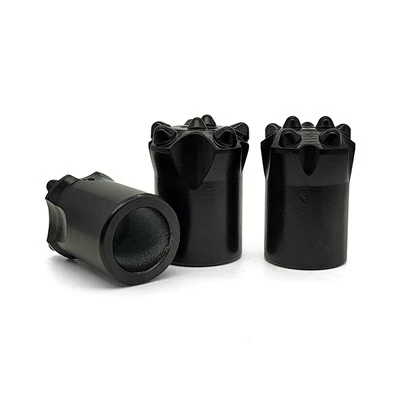
If you’re tired of dealing with adapters that don’t line up, that cause hammer damage, or that you have to force on just to get the job done, hit us up. We can talk about your specific DTH model, what size adapter you need, and make sure you get parts that are made to the right polarization. No guesswork, no hassle, just adapters that work when you need them.
DTH Bit References
- Drilling Engineering Association. (2021). DTH Drilling Tool Compatibility and Performance Standards. DEA Technical Paper Series.
- Ingersoll Rand. (2022). DTH Sub Adapter Installation and Maintenance Guide. Industrial Drilling Division.
- API Specification 7-1. (2020). Threading and Pole Polarization for Downhole Drilling Tools. American Petroleum Institute.
- Sandvik Mining and Rock Solutions. (2023). DTH Hammer and Sub Adapter Alignment Best Practices. Technical Field Bulletin.
Super Rock Machinery Equipment (Qingdao) Co., Ltd.
We are one of the most professional DTH sub adapter manufacturers and suppliers in China, featured by quality products and good price. Please feel free to buy advanced DTH sub adapter for sale here from our factory. Welcome to view our website for more information.
Address: No. 45, Pengwan Road, Qianwan Bonded Port Area, Qingdao Sub-district, Free Trade Pilot Zone, Shandong China
E-mail: sales@superrocktools.com
WebSite: https://www.superrocktools.com/
