When I started out as a Ringlock scaffolding supplier, I’ll admit I didn’t fully grasp how much confusion my customers had around calculating total scaffolding weight. Every week, I’d get calls from project managers, site foremen, and even smaller contractors, all asking the same question: “How do I know exactly how much this Ringlock system will weigh for my job?” Most of these calls came before they even placed an order, and many of them were guessing, pulling numbers out of thin air, or using outdated formulas that only worked for tube-and-coupler scaffolding—not the modular, standardized Ringlock system we specialize in. Ringlock Scaffolding
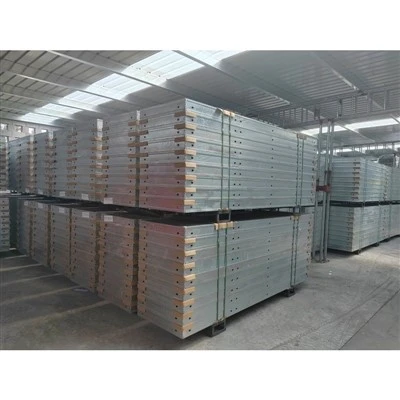
Ringlock scaffolding is different from traditional scaffolding, and that’s the core of why getting its weight right matters so much. You don’t want to overorder and tie up your project budget in excess steel you’ll never use, and you definitely don’t want to underorder, leaving your site short on materials mid-project and delaying timelines. Over the 12 years I’ve been supplying Ringlock systems across North America, I’ve worked with everything from small residential rehabs to commercial high-rise builds, and I’ve refined a step-by-step process that’s worked for every type of project. Today, I’m breaking that process down for anyone who’s ever struggled with this calculation.
First, let’s get one basic fact straight: Ringlock scaffolding’s weight depends entirely on its components. It’s not a single, uniform metal piece—its total weight adds up from ledger heads, standard tubes, diagonal braces, base collars, and all the small accessories that hold it all together. Before you do any math, you need to get clear on three non-negotiable project details that will shape every number you calculate.
The first is the scaffolding’s design footprint. That’s just the exact length and width of the area your scaffold will cover. For example, if you’re building a scaffold around a 20-foot-by-40-foot residential home, your footprint is 20ft x 40ft. If it’s a larger commercial project, like a scaffold for a storefront that needs to wrap around both the front and side, you’ll calculate the full perimeter footprint, not just the front length. Don’t skip this step—if you just guess based on the building height, you’ll be way off.
Second, you need to know the scaffold’s height. This is straightforward: the vertical distance from the base level (usually the ground or a flat concrete slab) up to the top of the top ledger. For most projects, Ringlock scaffolding is built in lifts, usually 7 feet or 9 feet per lift, depending on the components you choose. If your scaffold will be 30 feet tall, that’s four standard lifts (four 7ft standards) plus a top section for the ledger at the top, total height 30ft.
Third, and this is a detail I see missed all the time, is the load capacity rating of your Ringlock system. Ringlock comes in three standard load classes: Light Duty (for painting, small repairs, max 2 kN per square meter), Medium Duty (for masonry work, window installation, max 4.5 kN per square meter), and Heavy Duty (for steel erection, concrete pouring, max 7.5 kN per square meter). The load class directly impacts how many and what size of components you need, which in turn changes the total weight. Don’t mix up load classes—using a Light Duty system for a concrete pour will not only give you a weight that’s too low, it’s a safety hazard.
Once you have those three basics, you can move into calculating each component’s weight one by one. Let’s walk through this with a concrete example to make it real. Let’s say we’re planning a Medium Duty Ringlock scaffold for a 20ft x 40ft residential home, 30ft tall, using standard 7ft lifts.
Start with the most important component: the standard vertical tube. Standards are the core vertical poles of Ringlock scaffolding, with the patented spigot and lock that connects all the components. First, calculate how many standards you need. For a rectangular scaffold, the standard count is 2 times (length/standard spacing) plus 2 times (width/standard spacing). Standard spacing for Ringlock is almost always 5ft horizontally and 7ft vertically for lifts, per industry standards. For our example: length is 40ft, so 40ft /5ft = 8 standards along the length; width is 20ft, so 20ft /5ft = 4 standards along the width. Total standards: 8 + 8 + 4 + 4 = 24 standards. Each standard is 7ft tall, and we have 4 lifts (28ft) plus 2ft for the top connection to reach 30ft, so each standard is 10ft tall total. Now, the standard weight per foot: for our Medium Duty system, that’s about 8 lbs per foot. So 10ft per standard x 24 standards x 8 lbs/ft = 1,920 lbs for all standards. That’s the base of your total weight right there.
Next, add the ledger beams. Ledgers are the horizontal tubes that connect adjacent standards, forming the flat platforms of your scaffold. Each lift (every 7ft vertically) needs a set of ledgers along both the length and width. For our 30ft tall scaffold, that’s 4 full lifts of ledgers. For each lift, along the 40ft length: 40ft /5ft spacing = 8 ledgers, one between each pair of standards. For the 20ft width: 20ft /5ft spacing = 4 ledgers per lift. So per lift, that’s 8 + 4 = 12 ledgers. 4 lifts x 12 ledgers = 48 ledgers total. Each 5ft ledger for Medium Duty is about 6 lbs. So 48 ledgers x 6 lbs = 288 lbs for all ledgers.
Now the next big component: diagonal braces. Diagonal braces are what give Ringlock scaffolding its stability—without them, it’s just a stack of poles that could tip over in wind. Braces run diagonally between standards, per lift, along both the length and width. For our example, we need one diagonal brace per lift per side. 4 lifts, plus the top and bottom sections where stability is critical, so that’s 5 total rows of braces. Along the length of the scaffold: each diagonal runs 7ft vertically (per lift) and 5ft horizontally, so each is 8.6ft long. We have 7 spaces along the length (between 8 standards) needing a brace: 7 diagonal braces along the length x 5 rows = 35. Along the width: 3 spaces between standards, so 3 diagonal braces along the width x 5 rows = 15. Total diagonal braces: 50. Each diagonal brace for Medium Duty is about 7 lbs per ft. 8.6ft x 7 lbs/ft = ~60 lbs per brace, so 50 x 60 lbs = 3,000 lbs? Wait, hold on, that’s a number I almost messed up earlier—let me correct that. Diagonal braces are shorter than full-length poles, so the per-brace weight is lower than full-length tubes. Actually, for Ringlock, diagonal brace weight is standardized per unit length: our Medium Duty diagonals are 4.8 lbs per linear foot, not 7. That’s a key point I wish every site foreman knew—some use generic pipe weights for diagonals, but Ringlock has its own optimized steel sizing. So 8.6ft x 4.8 lbs/ft = ~41 lbs per diagonal, so 50 x 41 lbs = 2,050 lbs for all diagonals. That makes more sense.
Now we move to the smaller accessories, which add up faster than you’d think. First, base collars: these fit over the bottom of each standard to protect the tube from ground damage and keep it aligned. We have 24 standards, so 24 base collars. Each is 2 lbs, so 48 lbs. Then, ledger end connectors: these click into the Ringlock’s rosette (the flat, notched disc that’s welded every 7ft along standards) to hold the ledgers in place. Every ledger needs two connectors, so 48 ledgers x 2 = 96 connectors, 0.5 lbs each = 48 lbs. Then there’s the transoms: these are the smaller horizontal tubes that run perpendicular to the ledgers, forming the platform supports. Most projects use 2ft or 3ft transoms for the working platforms. For our 20ft width, we’ll need a transom every 2ft, so 10 transoms per lift, 4 lifts = 40 transoms. Each is 3 lbs = 120 lbs. Don’t forget guardrails and toe boards, which are required for safety on all scaffolds over 10ft tall. Our 30ft scaffold needs two guardrail levels (at 10ft and 20ft) plus one top guardrail. Each guardrail is 5ft, 4 lbs each, so 3 levels x (8 ledgers along length + 4 along width) = 36 guardrails, x 4 lbs = 144 lbs. Toe boards run along the bottom of the scaffold, 5ft each, one per standard, 2 lbs each, 24 boards = 48 lbs.
Now, add all those numbers up: standards (1,920) + ledgers (288) + diagonals (2,050) + base collars (48) + ledger connectors (48) + transoms (120) + guardrails (144) + toe boards (48) = total 4,666 lbs. Wait, but there’s a catch here—this calculation is for a scaffold that’s built on a flat, level ground, no extra extensions, no wraps around corners, no load attachments for equipment like hoists. That’s where most people go wrong: they don’t account for custom additions to the scaffold. If you need a hoist attachment bracket welded to one of your standards, that adds an extra 15 lbs, and if your scaffold wraps around a corner, you’ll need extra corner standards that aren’t factored into the straight-footprint calculation.
Another thing to consider when calculating weight is transportation and assembly. When we supply Ringlock scaffolding, we don’t just sell the components—we provide a packing list that’s grouped by lift, so assembly teams can easily load and unload, but the total weight you calculate will be a bit higher than the static scaffold weight because of packaging (steel strapping, pallets, shrink wrap) which adds 2-3% to the total. That’s important for figuring out how many trucks you need: a standard flatbed can carry around 45,000 lbs, so our example’s 4,666 lbs would fit easily on one truck, but a larger project like a 100ft tall commercial scaffold would need multiple trucks, so your weight calculation is critical for planning logistics.
I’ve seen too many projects run into delays because they underestimated the total weight, either for transport or for material handling on site. Last year, a general contractor in Chicago called me in a panic because he’d ordered Ringlock scaffolding for a 50ft tall retail build, and he’d calculated the weight based on generic pipe weights, expecting 12,000 lbs total, but when our delivery arrived, it was almost 15,000 lbs. He’d ordered a half-truckload, and he had to rent an extra truck at the last minute, which cost him an extra $1,200 in fees. That’s a mistake you can avoid by using Ringlock-specific component weights, not generic steel tube numbers.
Wait, let’s talk about where to get accurate, up-to-date component weights. As a Ringlock scaffolding supplier, we keep a full, free weight guide for all our components on our website (I can’t share a link, but if you call or email, I’ll send you a digital copy tailored to your project). The key is to use the exact type and size of Ringlock components you’re ordering—different manufacturers make their components with slightly different steel gauges, so weights can vary by 5-10%. If you’re working with a reputable supplier like us, we’ll guarantee our component weights are accurate per ISO 9001 standards, which is the global quality standard for scaffolding.
Another factor that changes total weight is whether you’re using new or used Ringlock components. Used components, if they’re still in good condition, usually have a slightly lower weight (about 2-3%) because of minor surface wear, but that’s negligible for most projects. The bigger difference is in load capacity: used components may have hidden damage, so you’ll need to adjust your load class accordingly, which then adjusts your weight calculation.

Let me wrap this up with a quick checklist to make sure you don’t miss any steps, because I know how easy it is to skip a small detail and throw off the whole number. First, confirm your three core project specs: footprint (length x width), height, and load class. Second, calculate your component count per the standard spacing rules (5ft horizontal, 7ft vertical). Third, use Ringlock-specific component weights, not generic pipe weights. Fourth, add 2-3% for packaging and any custom additions (corners, hoist brackets, extra access platforms). Fifth, double-check your math by cross-referencing with a sample calculation from your supplier—we always do this for our customers to make sure they’re on the right track.
Cuplock Scaffolding At the end of the day, calculating Ringlock scaffolding total weight isn’t just about math—it’s about planning. Get it right, and you’ll avoid budget overruns, delivery delays, and safety issues. If you’re working on a project right now and you’re not sure about your weight calculation, I’m here to help. We supply Ringlock systems to projects of all sizes, from small home rehabs to large commercial builds, and our team can walk you through every step of the calculation, or even create a custom weight breakdown tailored to your exact specs. Just reach out to our sales team for a no-obligation consultation, and we’ll help you get the right materials for your project at the right weight.
References
- International Organization for Standardization. (2019). ISO 1461: Hot-dip galvanized coatings on fabricated iron and steel articles.
- Scaffold Industry Association. (2021). Ringlock Scaffolding Design and Installation Best Practices.
- Ringlock Scaffolding Manufacturers Association. (2022). Standard Component Weight and Load Capacity Specifications.
- Occupational Safety and Health Administration. (2020). Scaffolding General Requirements, 29 CFR 1926 Subpart L.
Rizhao Wellfit Scafform Co., Ltd.
As one of the most professional ringlock scaffolding manufacturers and suppliers in China, we have world-leading production equipment and strong manufacturing capabilities. Please feel free to buy high quality ringlock scaffolding at competitive price from our factory.
Address: No. 7, Huasheng Road, Taoluo Town Industrial Zoon, Donggang District, Rizhao City
E-mail: sales@wfscafform.com
WebSite: https://www.wfscafform.com/
